
FCDOT will study speed limit reductions to 20 mph
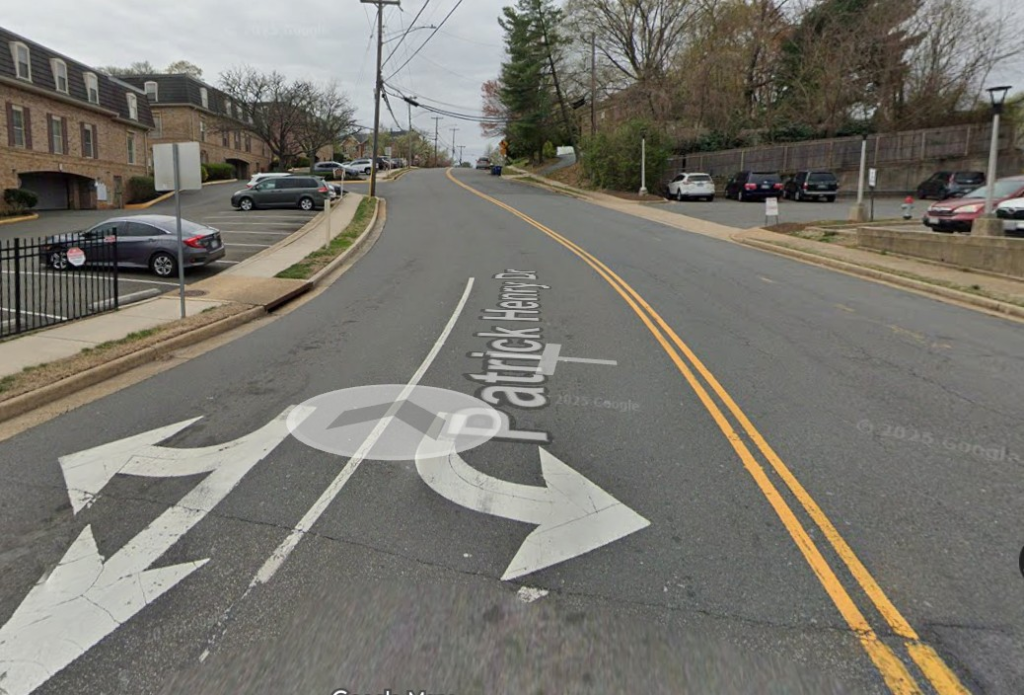
The Fairfax County Department of Transportation (FCDOT) is conducting a pilot study to measure the impact of reducing the speed limit on certain roads from 25 to 20 miles per hour.
The study includes four roads in Mason District:
- Patrick Henry Drive from Leesburg Pike to Beachway Drive.
- Peace Valley Lane on the west side of Justice High School.
- Beachway Drive from Patrick Henry Drive to Nevius Street.
- Nevius Street from Leesburg Pike to Beachway Drive.
FCDOT expects to have the new speed limit signs installed in summer 2026.
Traffic speed, volume data, and public feedback will be collected before and after implementation as part of the pilot evaluation process. The evaluation is expected to be conducted in January 2027.
Community members are encouraged to take a survey on the Mason District part of the pilot here by Dec. 31.
The reduced speed limit pilot is being carried out in the Providence, Hunter Mill, and Dranesville districts, as well as Mason.
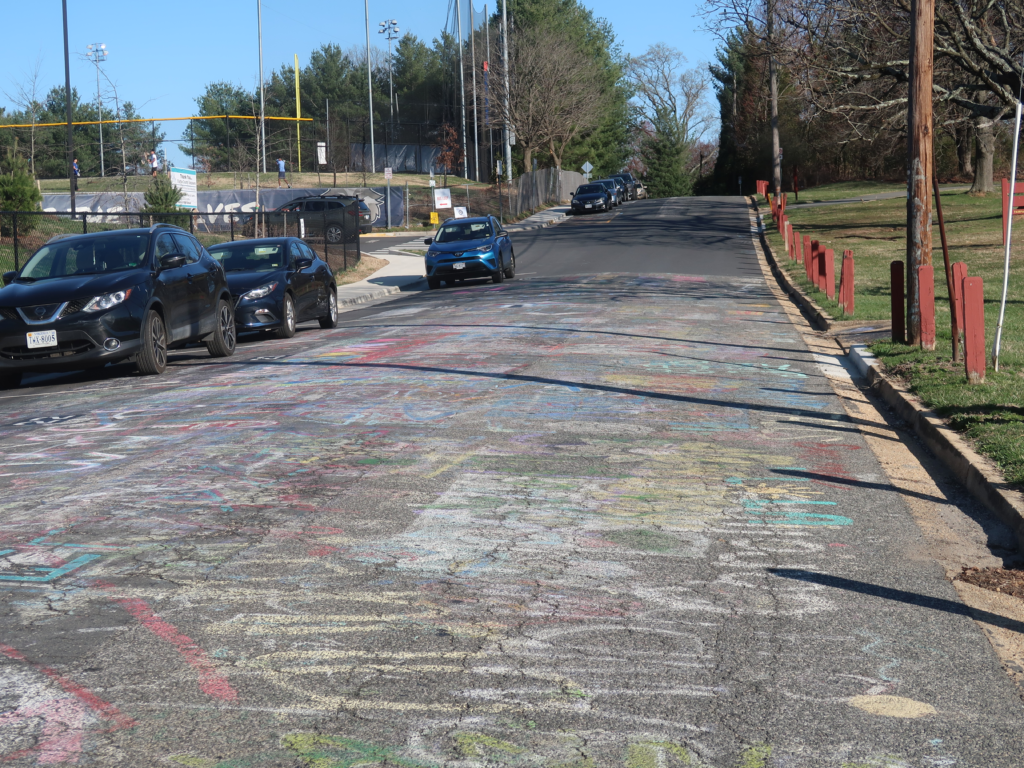
The goal is to create a safer environment for walking, biking, riding, and driving.
The roads in the pilot were identified by FCDOT in coordination with the Board of Supervisors district offices.
The pilot includes roads with various characteristics. Among the factors considered: pedestrian activity, presence of sidewalks, marked crosswalks, transit stops, and the proximity of schools and other community uses.
FCDOT also looked at Fairfax County’s Vulnerability Index for the area, which takes into account such data as residents’ occupations, education, language, income, transportation, health insurance, and housing.
The pilot study follows action by the Virginia General Assembly in May 2024 that granted authority to local jurisdictions to reduce speed limits on roads within business or residential districts that have a 25 mph speed limit.
In October 2024, the Board of Supervisors’ Transportation Committee directed FCDOT to develop the pilot study.
Reducing traffic to a crawl will affect people who obey the speed limits anyway, but do nothing for those who speed. If you don’t enforce the law, then you will see speeding. I cannot imagine that reducing the speed limit from 25 to 20 will help pedestrians. Are any of you having problems crossing these streets? If so, it doesn’t have anything to do with the speed limit. Mark my words – this will happen and will spread as the BoS will find statistics to justify it to themselves to continue reducing speed limits. This will come, of course, at the cost of our time and penalize those of us who never have accidents anyway.
Without active and persistent enforcement the new or current laws, to include speed limits, are meaningless suggestions. We don’t have enough police officers to enforce the traffic laws on most streets in Mason. Police officers have little incentive or support to enforce the “quality of life & safety” laws as the Commonwealth Attorney Steve Descano picks to prosecute or not on traffic enforcement – his position is to use his bias to change who faces prosecution of crimes and what crimes will be prosecuted.
If drivers aren’t complying with 25 MPH today, changing the sign to 20 MPH won’t suddenly make them comply. Speed compliance is driven by road design and enforcement, not by lowering a number on a sign.
Please NO- like others said don’t penalize the people following speed limits and reasonable flow of traffic. Enforce the current speed limits and you will see safer drivers. Or just increase the penalties for speeding! Congestion all over Fairfax County, specifically Annandale, Springfield, and Falls Church is already horrible enough.
I think enforcement is an important part of equation, but it is also wholly inaccurate that lowering speed limits won’t slow everyone down. Lowering the speed limit decreases the capacity of the road. This means more traffic. More traffic inhibits speeding.
Another part of the equation that is missing are other traffic calming measures. On Beachway, something as simple as flower or plant pots on the center lines between Edgewater and Patrick Henry would help.
To be clear, the common theme in these comments is not that a lower speed limit won’t slow anyone down. The consistent argument being made is that enforcement is necessary to ensure compliance, and without it, changing the number on the sign has limited effect.
That point is valid as far as it goes. Enforcement matters.
What’s missing, however, is that compliance is only one mechanism by which speed is reduced. Lowering a posted speed also reduces roadway capacity. Reduced capacity increases traffic density, and higher density naturally limits how fast vehicles can travel, regardless of whether drivers are consciously “complying.”
That’s why speed limits, enforcement, and road design have to be considered together. Relying solely on enforcement assumes unlimited police resources. Relying solely on signage assumes voluntary compliance. Neither assumption holds in the real world.
In that sense, lower limits don’t just slow cars, they filter users. Residents and destination traffic remain; cut-through and speed-oriented drivers leave. That may be an intended outcome, but it should be acknowledged explicitly rather than framed as a safety measure that relies on voluntary compliance.
The tradeoff is that compliant drivers bear the immediate cost, while noncompliant drivers adapt by avoidance. That’s not inherently wrong, but it’s a policy choice, and it should be discussed honestly.
My cruse control does not work below 25 mph.
Data is clear. Lower speeds save lives, and reduce injury.
We universally need lower speeds.
This is a positive solution.
I got a ticket from a speed camera for driving 31 in a 20 in Falls Church. Do you know how slow 20 is? You’ll be going 20 around a blind turn and a car with modified exhaust will rear end you.
I believe the real reason this is happening is to raise money. This is another tax. Let’s see how happy everyone is once they get their surprise $100 tickets.
I bet there are big contracts in the pipeline for more speed cameras.
We don’t need 20 mph SIGNS. That’s all these are, are signs that no one will comply with.
Here’s a more pragmatic solution: Raise the limit from 25 to 30, and call it maximum speed instead of speed limit. Or even raise it to 35.
The problem is not that most drivers exceed 25 by a couple mph and therefore, put pedestrians and bikers in danger.
The problem is that some go 45-50 and get away with it. Drivers regularly speed 45-50 through my 25 mph neighborhood, and I have not once in 15 years seen one person pulled over by police within 1/2 mile either direction of my house.
The best we could do was get signs that say “additional fine” for speeding. That did nothing to lessen the problem.
(I am not tucked away, but directly off a major throughway and not far from a police station.)
I’m going to put a sign up in my yard that says “mow my lawn” — how successful will that be?