
Invasive spotted lanternflies are spreading all over the county
By Shane Gomez
Spotted lanternflies are booming this summer throughout the D.C. region, including Fairfax County.
The species is native to East Asia, but is invasive here and is growing in number and range. Since the nymphs started maturing into adults in July, residents are spotting more of them.
A prolific appetite, lack of enough predators, and hitchhiking behavior make spotted lanternflies highly invasive, said Jules Amanita, spotted lanternfly field supervisor for the Virginia Department of Agriculture and Consumer Services.
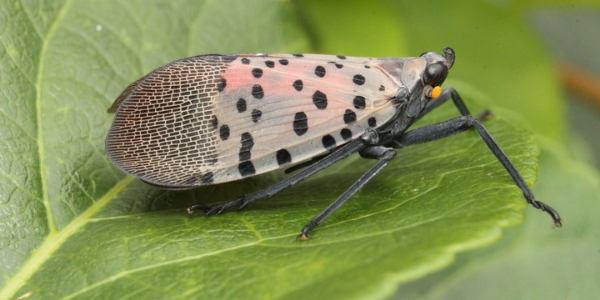
These red-and-black polka-dotted insects are beautiful, but they’re harmful.
Spotted lanternflies damage the plants they feed on. They also excrete a substance called honeydew that falls onto material and vegetation and causes sooty mold, which smells foul, blocks photosynthesis, and leaves the fruit unusable.
These insects are a threat to the grape, hop, apple, and peach industries. They also disrupt food chains by displacing native insect species.
Invasive insects typically experience an exponential population spike at first. Then, they level off, but damage still occurs, said Amanita. “Right now, in most of Virginia, we’re still on that spike.”
In 2014, the first spotted lanternflies in the U.S. were found in Berks County, Pa. Egg masses likely arrived in a shipment of flagstone. Four years later, they were found in a stone yard in Winchester, Va.
Then, several years ago, they were spotted in the western part of Fairfax County, said Rachel Habig-Myers, urban and community forestry coordinator at the Fairfax County Department of Public Works and Environmental Services. They have since spread throughout the county.
In 2021, spotted lanternflies were detected in Annandale in a shipment of produce at a grocery store.
“Lanternflies are a real menace,” said Annandale resident Richard Adi. “Now, they’re everywhere.”
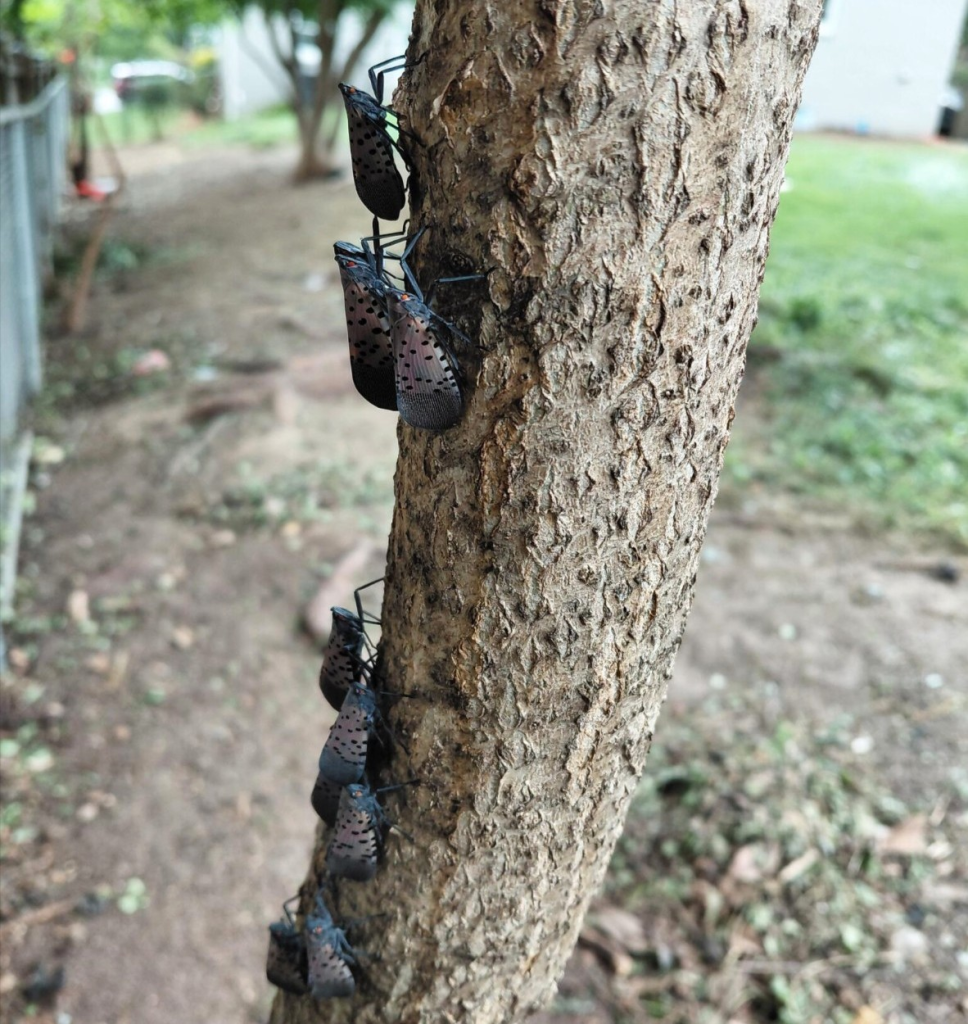
He first noticed them while working in his backyard. “I wasn’t expecting them, but then I saw them lined up along several trees, mostly maples. The ground beneath the trees was glistening, and I wondered what was causing it,” Adi said. “That’s when I spotted the flies clustered on the trunks and realized the trees were heavily infested.”
Adi, who has lived in Annandale for five years, kills spotted lanternflies on sight. He also shares mitigation tips, hoping to get others to join the fight.
“We have the benefit of this occurring in a lot of other places before it reached us. So, we know that it will come through like it did in Philadelphia,” said Habig-Myers. “There will be a lot of them for a few years. Then, their populations will wane. Sometimes there will be a lot. Sometimes there won’t be.”
In time, Habig-Myers said, native animals and insects will learn to eat them.
The Virginia Department of Agriculture fights the insect infestation by treating locations that are at high risk for spreading it to other locations, like industrial properties and railroads, said Amanita.
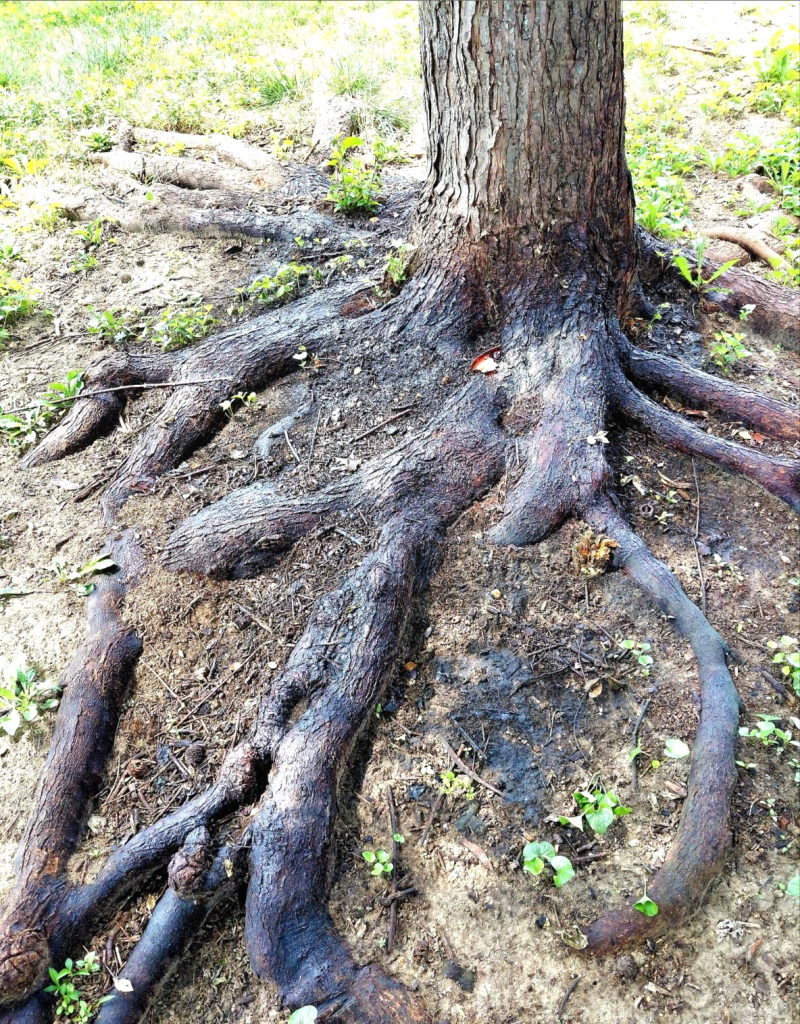
Fairfax County targets the spotted lanternfly’s preferred host plant, the tree of heaven, which is also from Asia and extremely invasive, said Habig-Myers.
“The idea is that if we reduce the amount of invasive tree of heaven, we would also reduce the amount of spotted lanternfly in those areas,” said Patricia Greenberg, invasive plant management program manager with the Fairfax County Park Authority.
Greenberg helps manage county contracts to reduce invasive bamboo as well as trees of heaven. Based on the specifics of each site, she works with the contractor Davey Tree to determine whether to remove a tree of heaven.
Experts advise homeowners to check their property for trees of heaven and have them removed – and kill any spotted lanternflies they see.
Bifenthrin, a contact insecticide approved for use on spotted lanternflies, must be used with caution because it is not selective and may kill beneficial insects. Dinotefuran, a systemic insecticide applied to trees of heaven, kills spotted lanternflies when they feed. Dormant oil is an organic insecticide applied to egg masses and nymphs.
“It’s really important for the public to be aware that invasive insects and invasive plants are a big problem in our community,” said Greenberg. “We do need all the support from residents if they have invasive species to control them and try to use more native species that support wildlife and all beings.”
Shane Gomez is Annandale Today’s summer intern.
This is a terribly xenophobic article. Just because an animal is not native to an area doesn’t mean it shouldn’t be cared for and loved like all of Mother Earth’s creatures.
This concept of favoring “Native” creatures and rejecting newcomers sounds, and is, xenophobic in the extreme.
Do better.
Well, these are not native to the US, which means they are destroying crops and not as many natural predators. So do you think we should not hunt and kill the pythons that are overwhelming the Everglades and now spreading throughout Florida? They are eating up all of the natural wildlife. Stomp on the spotted latern fly and help save the native population.
Our native species rely on our native plants to survive. Spotted lanternfly is a non native and a threat to both. More information on Spotted lanternfly: https://www.aphis.usda.gov/plant-pests-diseases/slf
First of all, “xenophobia” specifically and exclusively refers to humans.
Second of all, there is a difference between non-native species and invasive ones. The invasive ones harm biodiversity and native life; they compete for resources, change the habitats, and mess with ecological interactions. In this case, the Japanese spotted lanternfly damages crops like grapes, hops, and fruit trees, as well as hardwood, and other local plants that are good for the soil and needs of the critters who already live there. A few lanternflies here and there, and a tree can possibly recover, but an infestation will kill the trees. The Japanese lanternfly is also harmful to bees (absolutely crucial to almost all life but also endangered) and other beneficial insects, and can cause dogs who ingest them to vomit. (Yeah, they do that a lot already, but their bodies are telling us the lanternflies are toxic to them).
I love all animals and will leave almost every single one of them alone, including the ones that creep people out or scare them–wildlife is fascinating to me and each critter has important work to do! However, this is a very different situation; if you won’t believe me, do your own homework. Talk to a professional naturalist.
Once an invasive species takes hold in a new territory, the whole region is stuck with them, for a long while, and you’ve lost one more opportunity to protect all the other species because you just had to have those lovely flowers, that wonderful bamboo “wall,” or those beautiful lanternflies because…you didn’t see how the falling dominos would bring so many others down with them?
Put in clover and pollinating plants instead of grass, leave the dandelions alone (because they’re a versatile, hardy species, not weeds), hire a genuine certified arborist instead of a trigger-happy dude with a chainsaw, and get to work saving the fireflies, bees, butterflies, and birds. Want to go whole-hog? Create a NWF-certified Backyard Habitat.
Great article – dozens more could be written about INVASIVE, non-native species of plants, insects, reptiles and animals. Conversely, species native to the US and North America are invasive and banned in other parts of the world. ‘Xenophobic?!’ That has nothing to do with any of this – I have non-native species in my yard but they are not invasive. I also have invasive plants (porcelain berry anyone?) that are a never ending problem. I overwhelmingly favor native creatures of all types, because over the millennia they have adapted and thrived in this geographic region. ‘Mother Earth’ favors harmony and diversity – which non-native, invasive species disrupt.
It’s not an animal. It’s not supposed to be here. We brought it here by accident. You may not have noticed how prices are up everywhere. Now picture what wineries will have to do to stay in business once their vines are decimated by this little beast. Or how farms will have to adjust to more of their crops being devoured. Prices are going to rise even more because of this little terrorist. It’s all fun and games until it starts messing with the wine. I took a torch to as many of the lantern flies around my neighborhood as I could last year and destroyed many egg patches. But then I would look up into the maple trees and see that the higher branches were -full- of the egg patches. It’s a losing battle. And there are substantially more of them this year than last. When you take an antibiotic to kill bacteria that is the source of a life-threatening infection, you’re killing some of God’s creatures. Or if you have a giardia infection, you may take something to rid yourself of the parasite, that too is killing God’s creatures. Are you providing loving care to these creatures? Every time you wash your hands with soap and water, you kill some of these microscopic creatures. What about ants or termites or houseflies? Do you allow them to stay inside and provide them with food and love? As humans, we eat meat and plants. We kill things that infect us or destory our food source. The crops all over the country will be suffering from this beast. Less food will mean increased prices. Given the recent cuts to services that help provide money for food to lower income families, this will make it even harder for many people to provide food for their family. I’m all about trying to save native species. They have adapted to the area and have a balance of predators that ensure they don’t harm or eliminate other native species. This is not one of those. This is a threat to the creatures you see all the time in the area. So step on them, burn them, trap them, do anything you can to decrease their numbers because they have few natural predators here.
Don’t feed the troll guys, they’re clearly just trying to get a response
Another word of caution – DO NOT USE STICKY TRAPS claiming to be for spotted lantern flies. These traps are not target-specific and they cause A LOT of problems for other wildlife including birds (trapped and killed by starvation) and butterflies (stuck and killed), not to mention bats (which get caught while out flying and eating mosquitos) and frogs.
Sticky traps are inhumane and ineffective in addressing a specific target problem. Avoid them at all costs.
I’ve found a handheld vacuum to be an excellent tool for collecting and disposing of nuisance and invasive insect pests, including spotted lantern flies and vegetable garden pests like cucumber beetles. It won’t completely solve the problem, but it will keep insect populations in check enough to protect the plant life in your yard most at-risk while not killing everything else at the same time. Removing invasive plants also goes a long way.
I recently observed harvestman (aka: daddy longlegs) eating spotted lantern flies, so native predators will eat them.
I’ve seen videos of ducks enjoying the lantern fly feast. Birds can be taught to eat them. Someone on another post suggested mixing in some dead lantern flies with bird seed. Some birds seem to get the hint and start killing them. We should also add in the nymphs. Every bit helps.
How come the Democrats allowed this fly to get into Fairfax – typical Democrats open borders policy!
The rat population spiked with cicadas brood because it was an easy food source. Will that happen here too? Your unattended fruit trees and berries in your yard aren’t just squirrel food folks. Look for rat and Burroughs in your yard. Traps and poison do not work.