
School Board limits the use of technology in the classroom
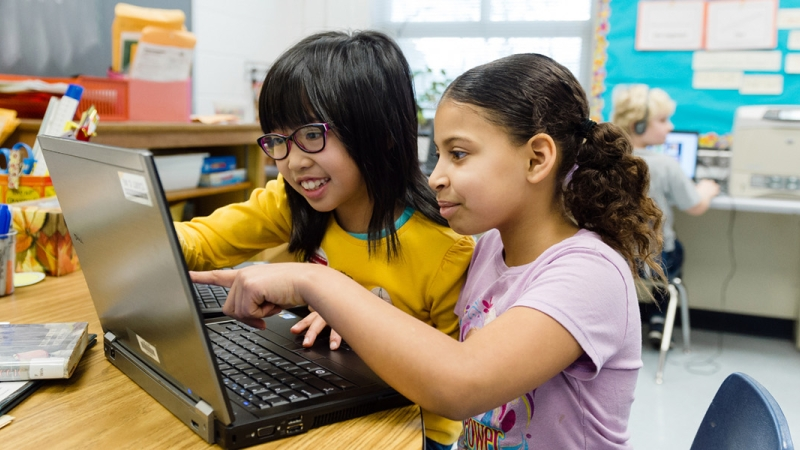
The Fairfax County School Board on July 16 passed a series of motions to limit the use of educational technology in the classroom.
The motions were supported by Fairfax County Parents for Intentional Technology, a group of parents and teachers concerned about the overuse of laptops, tablets, and artificial intelligence in schools.
The school board approved the following seven motions:
- A motion introduced by Tom Dannan (Braddock) and passed unanimously directs the superintendent to prohibit the use of FCPS-issued laptops and tablets for students enrolled in pre-kindergarten and kindergarten beginning in the 2026-27 school year.
An exception is allowed for students who require access to those devices for Individualized Education Programs, 504 plans, translation purposes, or multilingual education support. The motion was amended to state that the prohibition of devices will remain in effect pending recommendations from the Educational Technology Review Committee.
- A motion from Melanie Meren (Hunter Mill) calls for the superintendent to deliver a plan by Nov. 12 for the storage of FCPS-issued laptops and tablets in the classroom when not in use for instructional purposes. Again, there’s an exception for students in special education or who need them for translation or multilingual education support.
- The board passed and amended a motion from Mateo Dunne (Mount Vernon) directing the superintendent to provide “a comprehensive inventory of Generative Artificial Intelligence tools and solutions as defined by FCPS” on laptops and tablets issued to students by Jan. 14, 2027.
The motion prohibits the use of AI for elementary school students and only allows AI for secondary school students if specifically authorized by a principal or the superintendent for specialized student projects.
- Another motion passed by the school board directs the superintendent to develop a pilot program for a tiered, positive-list firewall architecture for electronic devices issued by FCPS.
The pilot program must be submitted to the school board by Dec. 10. It will be implemented at two elementary schools, two middle schools, and two high schools to begin in the third quarter of the 2026-27 school year.
The motion calls for the pilot program to consider “access to apps, extensions, and websites by grade levels, as well as how such an architecture would provide additional protection for students from cyberbullying, inappropriate content, and predatory behavior.”
The results of the pilot program are to be submitted to the School Board by June 10, 2027 “to guide possible division-wide expansion for the 2027-28 school year.”
Related story: School news roundup – June 2026
- The School Board directs the superintendent to deliver a report by Dec. 10 “on the technical and operational feasibility of allowing elementary, middle, and high school students with a documented medical or developmental need to opt out of the use of FCPS-issued laptops and tablets for instructional purposes.”
- The board directs the superintendent to amend all regulations on student devices to prohibit the use of students’ personal electronic communication and computing devices – including laptops, tablets, smart watches, and smartphones – during the instructional day.
- The final motion calls for the Education Technology Review Committee to prioritize evaluating a plan to implement network-level filters to block direct student access to the YouTube platform for all students in PreK through the 8th grade.
Fairfax County Parents for Intentional Technology (PIT) supports all of the motions “as important progress toward a more intentional and balanced approach to technology in our classrooms.” A petition by the group calling for the School Board to ban generative AI for grades K-8 and imposing a one-year moratorium on AI for grades 9-12 was signed by 1,358 people.
“We’re not opposed to technology. We want to restore a balance on how technology is used in the classroom,” said Alix Fetch of PIT. “We don’t want schools to give our kids AI until we have guardrails.”
The school board deserves a great deal of credit–particularly Anderson, Meren, and Dunne–for their willingness to listen to, and work with, parents and families. A more balanced approach to technology will benefit our students greatly.