
Budget shortfall predicted for Fairfax County
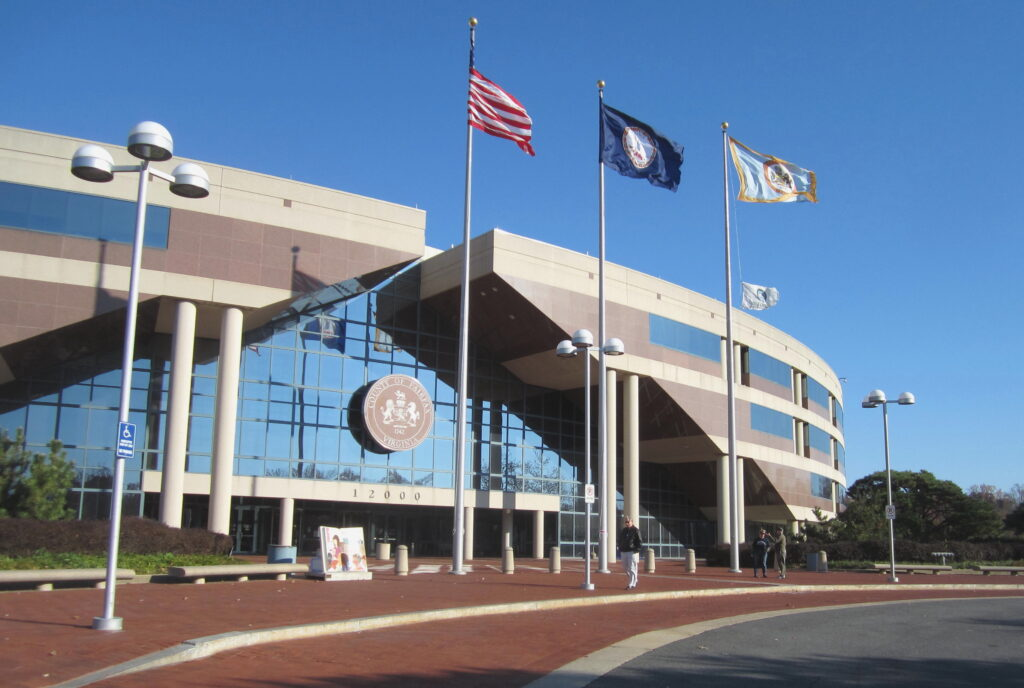
The Fairfax County budget forecast for fiscal year 2027 looks grim, according to statistics discussed at a joint meeting of the Board of Supervisors and School Board last week.
“With county revenues estimated to increase by $225.5 million, there is a combined net projected budgetary shortfall of $131.5 million,” according to the FY 2027 Budget Forecast drafted by County Executive Bryan Hill.
The projection of revenue and expenses will inform the proposed budget to be announced by Hill on Feb. 17. The county’s FY 2027 starts on July 1, 2026. Fairfax County Public Schools Superintendent Michelle Reid will release a proposed budget on Jan. 22.
“Economic uncertainty continues, particularly given unpredictable federal policies,” the Budget Forecast states. That uncertainty is due to the unknown impact of federal employment and procurement spending; the federal government shutdown, which delayed contracts and reduced consumer confidence; federal funding cuts; and the impact of trade policies on inflation and consumer sentiment.
Related story: Fairfax County gets back 50 cents for every dollar it sends to Richmond
Here are some highlights from the budget forecast:
- While state tax revenues have increased this year, that will not be enough to cover major budget pressures, such as cuts in Medicaid and SNAP.
- Unemployment has risen in Fairfax County from 2.7 percent in January 2025 to 3.7 percent in August 2025, mostly due to federal worker layoffs.
- The budget forecast predicts slower growth in the county’s real estate tax base. The number of active residential listings for sale is up almost 41 percent from FY 2026. Mortgage rates are still elevated, and affordability is low, resulting in slower appreciation relative to last year.
- Non-residential values are projected to decline for a third year in a row, driven mainly by losses in office property values.
- Residential equalization is projected at 2.9 percent for FY 2027, compared to 5.34 percent in FY 2026.
- Residential values are projected to increase 3.2 percent in FY 2027.
- The average sales price of all homes is up 2.9 percent this year through October.
- The average number of active listings for sale is up 40.6 percent compared to a year ago, while the number of home sales is up just 0.9 percent. Homes spent an average of 26 days on the market in October 2025, compared to 18 days in October 2024.
- Nonresidential values are projected to decrease by 0.55 percent in 2027.
- Office buildings with elevators are expected to decline in value by 5 to 8 percent. Vacancy rates for these properties are up 1.6 percent year-over-year.
- The value of retail properties is projected to increase by 1 to 3 percent.
- The county projects a significant growth in business property tax revenue as a result of new data centers.
- Sales tax revenues are expected to increase by 1.5 percent, down from a 2 percent increase in FY 2026.
- Other than employment compensation adjustments required by collective bargaining agreements and other mandated changes, the Budget Forecast anticipates limited investments in other priorities, such as new facilities and the Board of Supervisor’s commitment to expand the Parks Zero Waste program. County agencies will be directed to provide funding reduction options of 5 percent.
I guess we can expect another increase to the property taxes since that is the only way the BoS knows how to raise funds. OR they can roll back the massive pay increase they gave themselves for their part time jobs.
The property taxes are killing me.
The projected 131.5 million dollar shortfall is not just a budget problem. It is a priorities problem. When I wrote to Chairman McKay about school funding, I pointed out that FCPS documents show roughly 5.7 million dollars a year for the Chief Equity Office and DEI staffing.
The County Office of Human Rights and Equity Programs is about 2 million dollars a year, and there are additional equity and One Fairfax initiatives spread through other departments. When you add up all identifiable county wide DEI related spending, the total reaches into the eight figures annually. It is around 13 million dollars or more. That money could be redirected to classrooms, public safety, or genuine tax relief before anyone talks about raising taxes again.
At the same time, many Fairfax residents who work for the federal government will receive only a 1 percent pay raise, which does not keep up with inflation. Any increase in property taxes wipes out that small gain and further erodes purchasing power for the people who live here.
There is also a federal funding risk that almost never gets mentioned. The Department of Education has already threatened or cut substantial education funding in other jurisdictions over disputes involving bathroom and gender identity policies under Title IX. Fairfax is on that radar. If local leaders adopt policies that place the county in conflict with federal enforcement, they are taking a financial gamble during a budget shortfall.
Before the Board raises taxes again, it should reduce non essential equity programs, protect federal funding, and prioritize core services. Homeowners and federal workers should not be expected to cover a shortfall that is made worse by avoidable policy and spending choices.
Definitely cut the illegal equity programs that cost a lot and put federal funding at risk.
What we need is a casino on top of a data center in Tyson’s.
Andres Jimenez loves a Tyson’s casino.
https://wtop.com/fairfax-county/2025/12/fairfax-supervisors-vote-to-oppose-casino-in-tysons/
No where in this article is the mention of the new Jan 1, 2026, 4% food tax or meals tax revenue.
According to the county’s website, revenue from the meals tax will “Reduc[e] the reliance on property taxes.” I suspect that’s as much of an answer as you’ll get. However, I have yet to see any evidence to support this claim. What’s truly sad is that the Democrats on the BOS will likely get away with ignoring the previous rejection of this tax by a majority of the county’s voters.
And that tax is based on wishful thinking.
The Board of Supervisors is projecting $60 million from the new food and beverage tax in the first six months, which assumes diners will shrug off higher prices and keep eating out at the same pace. But restaurant traffic in Northern Virginia is already down because costs have climbed so steeply. Add another 4% on January 1st, and those numbers won’t magically rebound.
This isn’t a realistic forecast, it’s the county betting against human nature. Families will cut back, seniors will cut back, and restaurants are already feeling the squeeze.
Counting on $60 million under these conditions isn’t planning. It’s wishful thinking dressed up as math.
The county’s expectation of collecting $60 million from the new food and beverage tax in the first six months is built on an assumption that diners will behave exactly as they did before inflation hit. They won’t.
Restaurant patronage is already falling across the region as prices continue to rise. The county is adding a 4% surcharge to a sector that is seeing fewer customers, smaller orders, and shrinking margins. That’s not a recipe for a smooth revenue ramp-up, it’s wishful thinking.
If county leaders want credible numbers, they should model the impact of reduced dining frequency and spending. Ignoring behavioral economics won’t make the problem go away.
McCay needs to go. He’s incompetent and doesn’t have any problem.Raising property taxes to a ridiculous amount while he takes a pay.Raise he’s terrible.
All of the DEI needs to go. It’s a ridiculous a waste of money that birthed ridiculous policies like not disciplining kids, allowing trans in other genders spaces resulting in rapes (Loudon) and a DOJ lawsuit when boys refused to share space with the opposite gender. and those boys were suspended. While this is Loudon, the same rules apply here. We were more divided on race, religion and gender when DEI was in full force. It all needs to go. That alone will save us 13 million. I’m sure there are other cuts that can be made and the money can be put to use for education and medicine. We need to choose our priorities and right now spending hundreds of thousands on lawsuits brought by the DOJ, DEI, and other ideological luxuries are a waste of money
Well said Denise…if a good number of our fellow Fairfax citizens would just stop and think a minute before automatically electing anyone with a (D) in front of their name…my home’s property tax has increased 62% since 2013 ($5,500 to $8,900). Unfortunately I haven’t noticed a 62% increase in how wonderful it is to live in Fairfax county.
Fairfax County always has enough money, because they just raise property taxes whenever they want more. There’s never a cut back in anything. Last year Fairfax County spent money fighting in court to give biological males the right to be in women’s locker rooms. Priority is definitely not on saving money or serving the broad constituency. It’s on using money to meet their own social and political agenda
Cutting DEI spending will not solve budget issues. The elected school board needs to take a hard look at school budget and hold the school administration to actually delivering a quality education in this county. The school budget accounts for at least 50% of the county budget. The school board and adminustration is being given a free pass here. The schools continue to ask for more money with no accountability for the quality of education they deliver.
Cuts in Federal money is the repsonsibility of of our current administration not our local leaders. The current administration cuts show how ignorant they are, considering it will hurt the people who voted for them and the vulnerable and disadvantaged the most.
No one suggested that eliminating DEI programs would fix budget deficits. It was an example of misplaced priorities. Twisting that into a claim that was never made is not a misunderstanding, it’s disingenuous.
Since you brought up school budgets, the county risks sacrificing more than $150 million in federal funding over the absurd decision to prioritize gender-facility policies that jeopardize that funding.