
Deer hunting season underway in parks
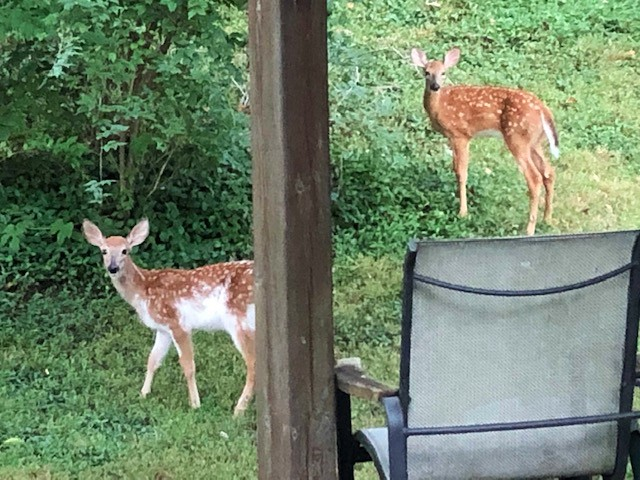
Fairfax County’s deer management program, which uses bowhunters to reduce the deer population, started on Sept. 12.
Bowhunters who meet the county’s standards are allowed to hunt deer in designated county parks Monday through Saturday from 30 minutes before sunrise until 30 minutes after sunset.
Parks remain open to the public during deer hunting season, which ends on Feb. 13, 2027.
During the 2026-27 season, bowhunting is allowed in 120 parks, including these sites in the Annandale/Mason District area:
- Accotink Stream Valley Park (656 acres)
- Americana Park (4)
- Deerlick Park (19)
- Eakin Community Park (33)
- Eakin Park, Mantua section (72)
- Holmes Run Stream Valley (80)
- Lake Accotink Park (407)
- Lillian Carey Park (54)
- Long Branch Stream Valley (90)
- Mason District Park (80)
- Roundtree Park (61)
- Wakefield Park (161)
During the 2025-26 deer season, archers took down 686 deer, up from 547 the previous year.
Another 66 deer were killed in managed nighttime sharpshooting operations by police officers, including 14 at Annandale Community Park.
This year, sharpshooting events are planned in 13 parks between November and March, including Annandale Community Park and Bren Mar Park.
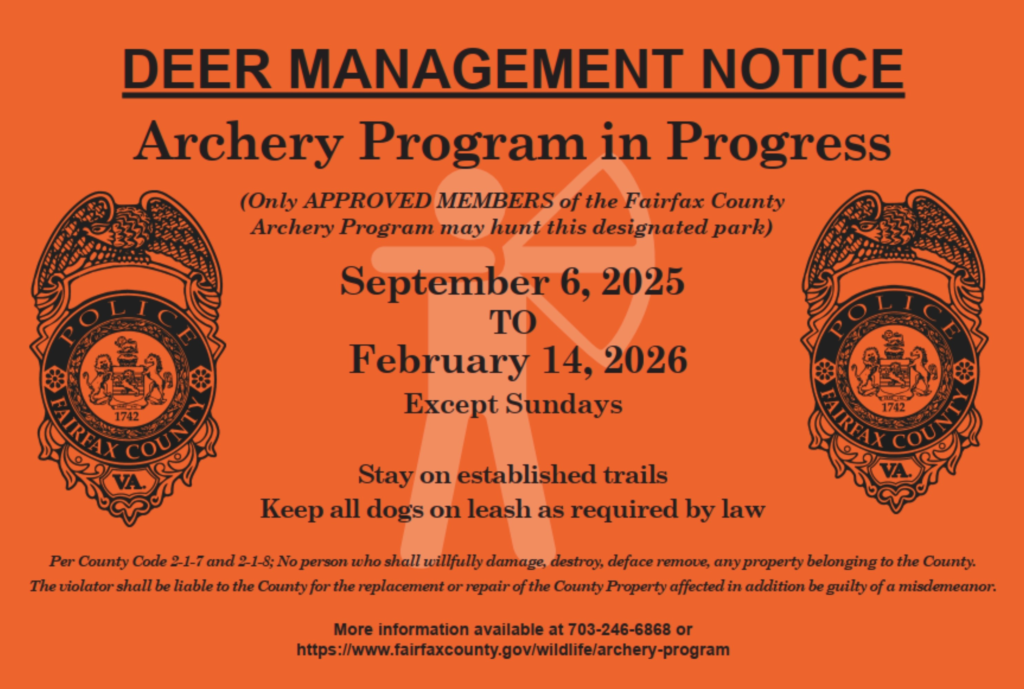
Archers position themselves in tree stands, which allow them to shoot deer from above. They must comply with all requirements for licenses, permits, and hunter safety education as mandated by the Virginia Department of Wildlife Resources.
Archers who complete a screening process are selected by Police Department staff to participate in the deer hunting program.
According to Fairfax County, the number of deer needs to be reduced because “increased habitat modification, loss of natural habitat, reduced hunting pressures, and a loss of natural large predators have contributed to an overabundant deer population.”
A healthy deer ecosystem can support 15 to 20 deer per square mile, the county says, while many sites have as many as 40 to 100 deer per square mile.
Growth of the deer population leads to an increase in deer-vehicle collisions, environmental destruction, an increase in ticks that cause Lyme disease, and the spread of chronic wasting disease among deer herds.
What does the county do with the deer after it’s been killed?
If it is a hunter that got the deer they can keep the meat or donate it to “Hunters for the Hungry”, which is where the police department donates the meat to after the sharpshooting events.