
Fairfax County must protect Lake Accotink while it builds a new sewer line
By Martin E. Shepherd
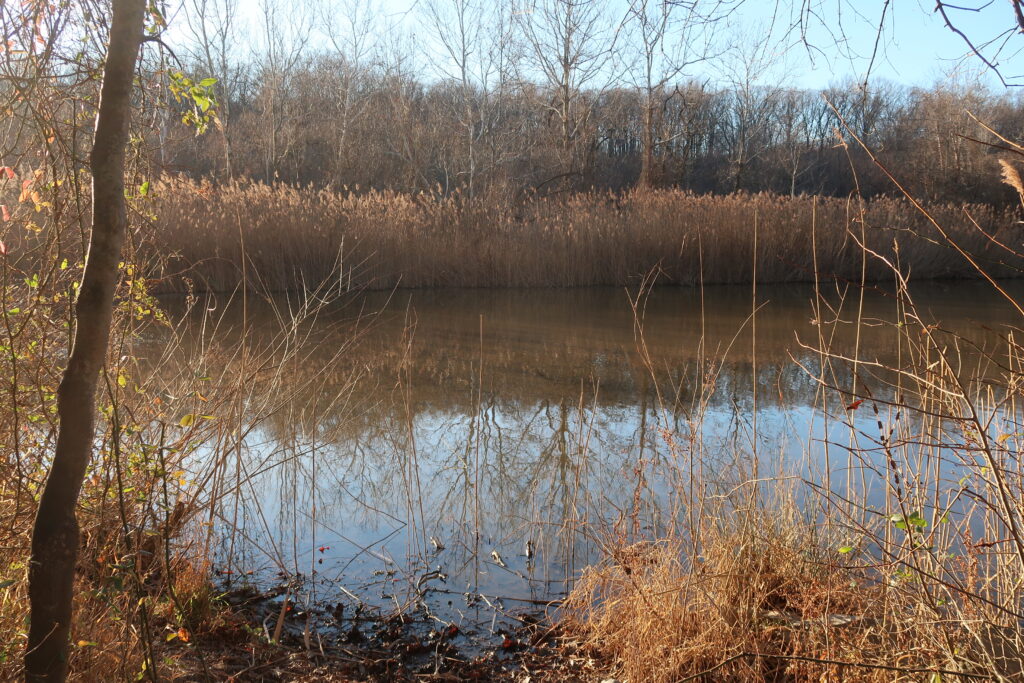
Fairfax County faces an important test of its commitment to environmental stewardship as it undertakes a major sanitary sewer expansion through the environmentally sensitive Hunters Branch corridor, a tributary of Accotink Creek.
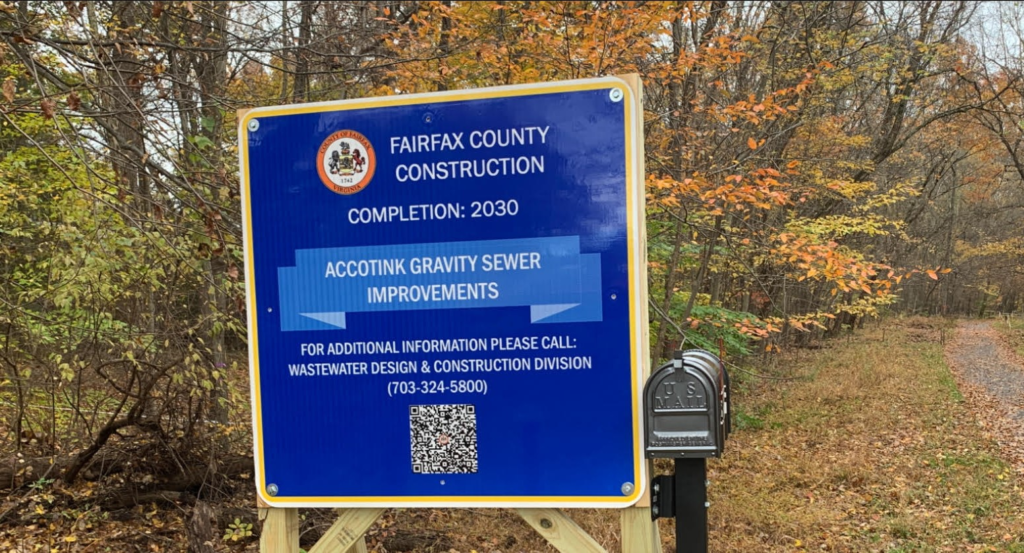
The Accotink Gravity Sewer Improvements Project will provide additional wastewater capacity to accommodate continued development, particularly in Tysons. While the need for this infrastructure is legitimate, the environmental consequences of its construction deserve greater public attention and oversight.
The project involves approximately three miles of new sanitary sewer pipeline, with construction extending through established stream corridors, forested areas, and sensitive habitats. Friends of Accotink Creek has raised concerns about the potential removal of more than 630 mature trees, disturbance of wetlands and vernal pools, and sections of the proposed pipeline alignment that depart from existing utility corridors.
These concerns extend well beyond the immediate construction area because Hunters Branch flows into Accotink Creek, which carries water and sediment downstream toward Lake Accotink.
A watershed already under stress
Lake Accotink has suffered decades of sediment accumulation that have substantially reduced its surface area and threatened its future as a recreational and environmental resource.
Fairfax County is now investing considerable public resources in the Smaller Lake Accotink Preservation Feasibility Study and associated Sedimentation Rate Study to better understand sediment transport and accumulation and the alternatives available for preserving the lake.
These investigations involve scientists from the United States Geological Survey and engineering consultants, including Arcadis and WSP/LimnoTech, who are examining the complex relationships between watershed conditions, sediment movement, and lake preservation.
Related story: A fix for Lake Accotink is years away
At the same time, another county project will introduce extensive excavation, soil disturbance, and vegetation removal within the same watershed. Construction activities can increase erosion and sediment transport when inadequate controls allow exposed soil to enter nearby waterways, particularly during significant rainfall.
This creates an important question for county officials: How will Fairfax County ensure that construction of a new sewer infrastructure does not worsen the very sedimentation problem it is simultaneously spending public funds to investigate?
Regulatory compliance not enough
The Accotink Creek watershed has a history of controversies involving stormwater management and environmental protection.
In 2012, Fairfax County and the Virginia Department of Transportation successfully challenged an Environmental Protection Agency stormwater-flow regulation intended to address sediment-related impairment of Accotink Creek. Although the court resolved that dispute on statutory grounds, its decision did not eliminate the underlying environmental problem.
Major transportation construction projects, including the I-495 Express Lanes, have also generated concerns about erosion, stormwater runoff, and sediment entering local waterways.
These experiences illustrate why residents should expect more than assurances that construction contractors will comply with existing environmental regulations.
Regulatory compliance establishes minimum requirements, but effective watershed protection also demands measurable performance, timely inspections, prompt corrective action, and transparent reporting.
Fairfax County should demonstrate that its environmental safeguards actually prevent avoidable damage rather than relying exclusively on documentation showing that contractors followed prescribed procedures.
Put existing scientific resources to work
Fairfax County already has an opportunity to strengthen environmental oversight by coordinating the Accotink Gravity Sewer Improvements Project with its ongoing Lake Accotink studies.
The county has assembled scientific and engineering resources to investigate sediment transport and accumulation throughout the watershed.
Rather than allowing separate project teams to work independently, the Department of Public Works and Environmental Services should formally engage U.S. Geological Survey scientists, engineering consultants, and responsible county officials in developing a coordinated approach to evaluating potential construction-related sediment impacts.
Before major land disturbance begins, the county should establish baseline stream conditions and collect appropriate turbidity, suspended sediment, and other environmental measurements. During construction, monitoring should evaluate changes that might result from excavation, vegetation removal, and stormwater runoff. The study team should also determine whether existing monitoring stations, field investigations, and sediment transport models can identify or quantify additional sediment attributable to sewer construction.
Where current monitoring methods cannot adequately distinguish construction-related impacts from other sediment sources, the county should consider supplemental measurements and monitoring locations.
This coordination should produce more than an exchange of information between project managers. The county should document participating organizations and their responsibilities, establish procedures for responding to adverse monitoring results, and make relevant inspection findings and corrective actions accessible to the public.
Incorporating these findings into both project records would strengthen accountability and provide valuable information for the county’s ongoing evaluation of sedimentation in Lake Accotink.
Protect the corridor and communities downstream
Environmental oversight must also extend to the physical construction corridor. Fairfax County should minimize unnecessary removal of mature trees, understory vegetation, and established stream buffers while protecting wetlands, vernal pools, and designated Resource Protection Areas.
Where the selected pipeline alignment departs from existing utility corridors, DPWES should explain how it evaluated the environmental consequences of alternative routes and why the selected alignment balances engineering requirements with natural resource protection.
Independent technical verification, regular inspections following significant rainfall, and clear authority to suspend work when serious environmental deficiencies occur would provide additional assurance that environmental protection remains a priority throughout construction.
These measures should complement, rather than replace, the county’s existing regulatory and permitting obligations.
Supervisors Walter Alcorn (Hunter Mill) and Dalia Palchik (Providence), whose districts encompass the construction corridor, have an important opportunity to lead this effort. Their colleagues representing downstream communities, particularly Braddock District Supervisor Rachna Sizemore Heizer, also have a direct interest in the outcome.
I have formally requested county officials establish specific environmental safeguards, coordinate the sewer project with the Lake Accotink studies, and provide a substantive written response identifying the responsibilities, monitoring arrangements, and accountability measures they will implement.
One watershed, one responsibility
Fairfax County should not manage sanitary sewer construction and Lake Accotink preservation as unrelated undertakings simply because different project teams administer them. The watershed does not recognize political boundaries, departmental responsibilities, or separate project budgets.
Sediment entering Hunters Branch can move into Accotink Creek and ultimately affect Lake Accotink, making coordinated planning and environmental oversight essential to protecting the entire watershed.
Residents who have questions or concerns about protecting the Accotink Creek watershed should contact their Fairfax County Supervisor, Accotink Gravity Sewer Improvements Project Manager Thomas Grala, [email protected], and Smaller Lake Accotink Preservation Feasibility Study Project Manager Turgay Dabak, [email protected].
Share your concerns, ask what environmental safeguards and sediment monitoring measures the county will implement, and encourage coordination between the two projects.
Public involvement and informed oversight can help ensure that necessary infrastructure improvements do not come at the expense of the watershed and Lake Accotink’s future.
Residents should not have to choose between reliable sanitary sewer service and preserving their natural resources. Fairfax County can provide both, but doing so requires measurable environmental safeguards, effective coordination, and accountability before construction causes damage that would be difficult and costly to reverse.
The county already possesses substantial scientific resources, engineering expertise, and institutional knowledge to address these challenges. It now has an opportunity to demonstrate that responsible infrastructure development and meaningful environmental stewardship can advance together.
Martin E. Shepherd is a former member of the Fairfax County Task Force on the Future of Lake Accotink and a longtime advocate for preserving and restoring Lake Accotink.