
Large solar project approved for Falls Church HS, but Dominion presents a challenge
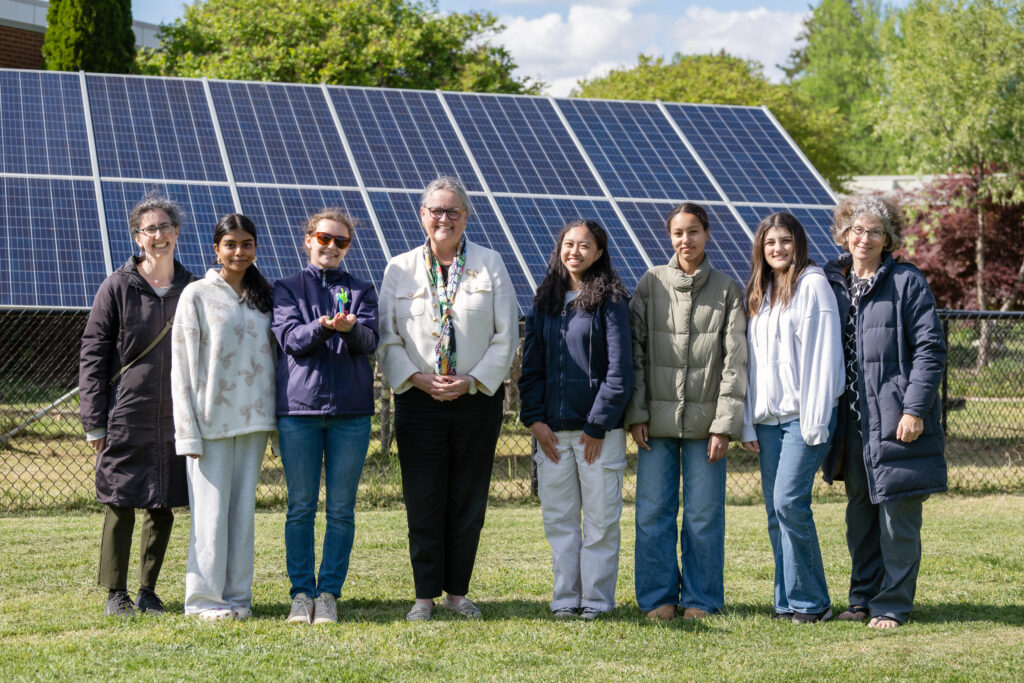
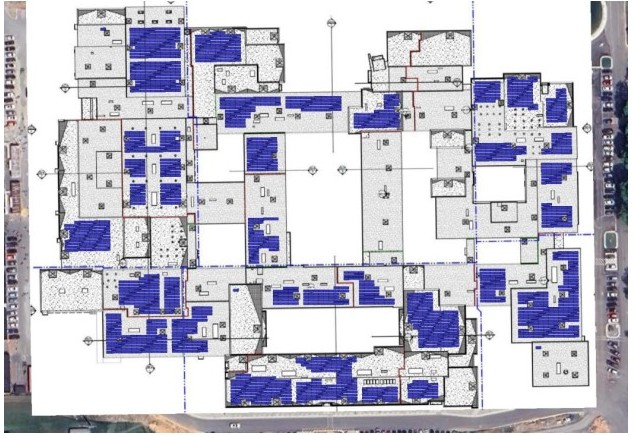
The Fairfax County School Board approved solar projects for 10 schools on Nov. 12, including a huge rooftop solar array for Falls Church High School.
That project is part of a 25-year solar power purchase agreement proposed by Sun Tribe Solar for six elementary schools, one middle school, and three high schools.
Sun Tribe would own, install, operate, and maintain the solar systems. Fairfax County Public Schools would purchase the electricity generated by the solar panels with no annual price escalation and no upfront solar installation cost.
An analysis by Arcadis estimated that the arrangement would result in approximately $5.27 million in cumulative nominal electricity cost savings over 25 years compared with continued utility purchases.
The savings for the 1.31 megawatt-system for Falls Church High School are estimated at $2.1 million over 25 years.
Falls Church High School has an active student-run Get2Green chapter that has been collaborating with parents and community members to advocate for solar panels at schools.
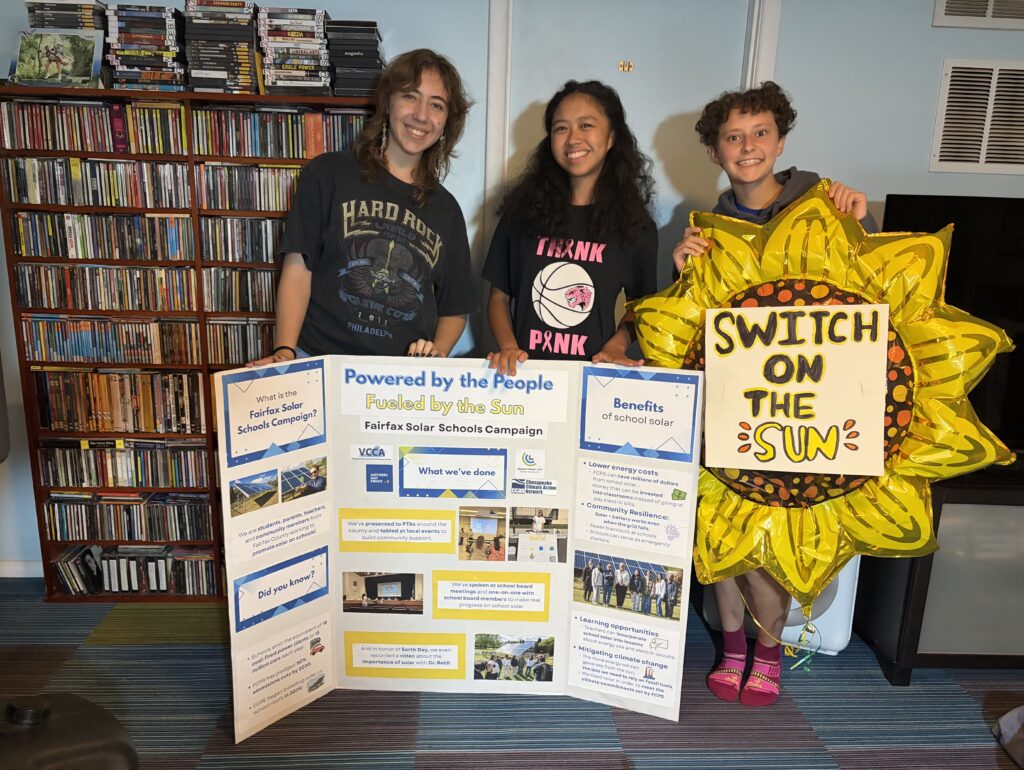
“Having renewable energy is really important,” says Get2Green leader Meg Lagera, a senior at Falls Church. “Solar panels save money in energy costs and also decrease carbon emissions. We are passionate about the environment.”
Solar advocates, however, are skeptical that those savings can be realized unless Dominion gets rid of its onerous direct transfer trip (DTT) requirements for arrays over 250 kW. That requirement forced FCPS to abandon its plans for a solar project at Annandale High School several years ago.
Sarah Karush, a Mason District resident, clean energy proponent, and the parent of a Falls Church High School senior, testified at the school board hearing about the DTT issue.
Karush said she appreciated the board’s commitment to reducing carbon emissions and deploying renewable energy, but said if the interconnection obstacle isn’t solved, the solar project might not be viable.
DTT is a utility protection system that disconnects distributed energy resources, including rooftop solar installations, from the grid in scenarios where adjacent portions of the grid fail.
Costs include installation of a “dark fiber” line at $250,000 per mile and other equipment. Fiber-based DTT can increase the total cost of a solar project by 40 percent or more. While Dominion requires DTT, other Virginia utilities, such as Appalachian Power, do not.
Solar installations made through power purchase agreements (PPA) do not cost anything upfront. Instead, they save FCPS money by locking in low rates on the power generated by solar panels.
Meanwhile, the rate FCPS pays for energy from the grid continues to rise. A 25 percent rate increase took effect in July for local governments and school divisions buying power from Dominion.
FCPS has been forced to limit its solar installations at other schools to arrays under 250 kW to avoid the DTT burden. This means the division cannot take advantage of all its available roof space. In addition, PPA rates are less favorable for smaller installations. While FCPS can still save money with smaller arrays, Dominion’s DTT requirement has severely limited the savings potential of going solar.
Fortunately, Karush says, legislation is expected to be introduced in the General Assembly in the upcoming session to minimize or eliminate solar interconnection costs.
In addition, “we can’t ignore the backdrop of the proposed merger between Dominion and NextEra,” she says. “If Dominion has been a poor partner for school solar, we can imagine how an even bigger utility will behave.”
Related story: School board urges SCC to reject Dominion/NextEra merger