
Board outlines concerns with a casino bill
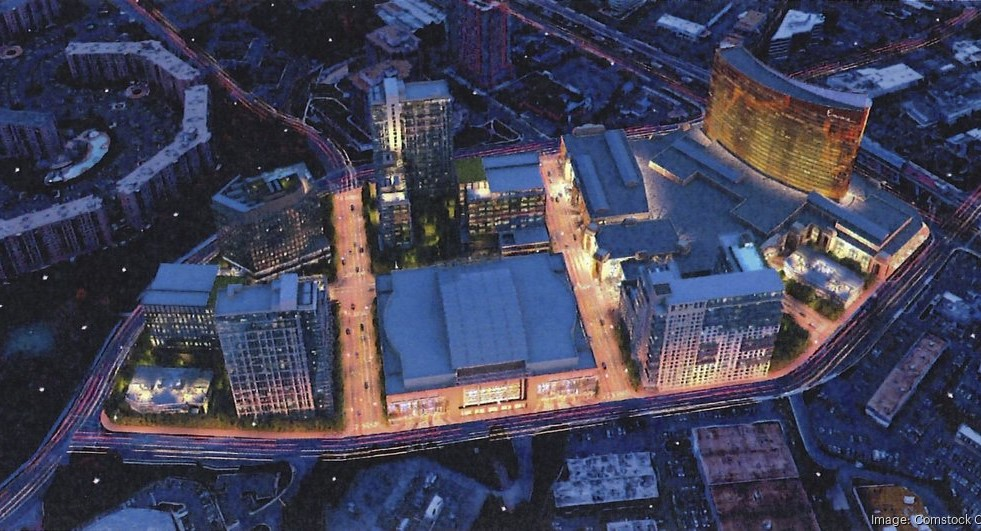
The Board of Supervisors unanimously approved a letter drafted by Board Chair Jeffrey McKay outlining a strategy for addressing state legislation that would authorize a referendum on a casino in Tysons.
The board then narrowly passed an amendment to the board’s legislative proposals offered by Superintendent Walter Alcorn (Hunter Mill), stating that the board formally opposes a casino.
The Virginia Senate passed a casino bill in 2025, but it failed in the House of Delegates. Senate Majority Leader Scott Suroval (D-Mount Vernon) plans to introduce a bill in the 2026 General Assembly.
Noting that companies that have invested billions of dollars in Tysons oppose a casino next to their properties, Alcorn said, “Our best chance of avoiding this commonwealth-imposed economic hardship is to include an explicit opposition statement in our legislative package.”
The motion states: “We oppose legislation in the General Assembly that authorizes a casino in Fairfax County without any request for such legislation from the Board of Supervisors, without implementation of a statewide gaming commission, and without a tax revenue split that substantially benefits Fairfax County as opposed to the commonwealth.”
Alcorn said allowing the General Assembly to make a land use decision for the county “would undermine decades of community consensus and economic success.”
The amendment passed on a 5 to 4 vote. In addition to Alcorn, McKay and supervisors Rodney Lusk (Franconia), Dalia Palchik (Providence), and James Bierman (Dranesville) voted for it.
Related story: Virginia Senate passes casino bill
Bierman said, “There is no need to waste time on a referendum when we know the people of Fairfax County will reject this as every single poll has shown.”
“This casino is being sold by a single developer, and the supposed economic benefits have come out of thin air,” he said, questioning whether a casino would generate as much tax revenue as projected.
Supervisors Andres Jimenez (Mason), Pat Herrity (Springfield), Daniel Storck (Mount Vernon), and Kathy Smith (Sully) voted no on the amendment, although they voted in support of McKay’s letter.
Even though McKay voted for the amendment, he expressed concerns about the board coming out against legislation “when we haven’t seen the bill, in the name of political expediency.”
“I’m troubled by the process,” and possibly setting a precedent, when there is nothing in the amendment specific to a single bill, he said.
McKay said he will focus on the strategy outlined in the letter to legislators, which updates the language in the letters the board sent to the General Assembly on casino bills in the past two years.
Related story: McKay letter addresses casino bill
The most important issue addressed in the letter is that if a casino bill were to pass, he said, the Board of Supervisors should have exclusive control over a referendum and when it should be held.
The letter also reiterates that any casino legislation should preserve local authority over land use matters and that the board supports the establishment of a gaming commission.
In addition, the letter “reiterates that the biggest financial problem the county is facing is the underfunding of public education,” McKay said. “Many who support this bill have suggested that the county needs revenue, and they’re not wrong. But we need state revenue for public education.”
This year’s letter adds language about the recent financial analysis that found Fairfax County gets back less than 50 cents from every dollar it sends to Richmond.
If a casino bill is promoted as a way to increase county revenue, the General Assembly needs to acknowledge that the county’s revenue problem is caused by the state, McKay said. “There are structural problems that have to be solved.”
Rather than simply state that the board is for or against a casino, he said, it’s more important to ensure that the bill includes protections for residents. “You can’t just have a position. You’ve got to have a strategy.”
It’s charming that the Board suddenly discovered its deep commitment to “protecting residents,” especially after shrugging off the zoning board’s recommendations the instant revenue shimmered on the horizon. And now we have this solemn memo to the General Assembly warning against any casino legislation “without a tax revenue split that substantially benefits Fairfax County.” Translation: our concern for the community is absolute, unless the state cuts us a big enough check.
At least the four dissidents didn’t pretend otherwise; they made their support public instead of hiding behind carefully massaged language. The rest of the Board’s moral outrage seems to fluctuate in direct proportion to the size of the projected revenue stream.
Look at what the MGM Grand Casino complex has done for Prince George’s County. And it doesn’t even have METRO stops. I would suggest that FFC send employee to the garages and count the VA license plates.
If my neighbors want to feed their filthy unethical habits, I’d rather they do it in Maryland, where that type of behavior belongs.
If people want to gamble, drink, hire escorts, and flirt with the criminal ecosystem that follows casinos, Maryland already has a venue for that.
Fairfax doesn’t need to import organized vice simply because some residents are willing to drive across the river to indulge it.
My concern isn’t moral posturing or the loss of revenue from Virginians gambling in Maryland, it’s the Board’s response itself. The BoS didn’t cite residential impacts, policing costs, traffic, or quality-of-life issues.
Instead, the BoS message to the state was essentially: come back with a revenue offer large enough to override those concerns. That’s not leadership; that’s a negotiation stance that treats community impacts as negotiable