
Virginia redistricting ruling challenged in the Supreme Court
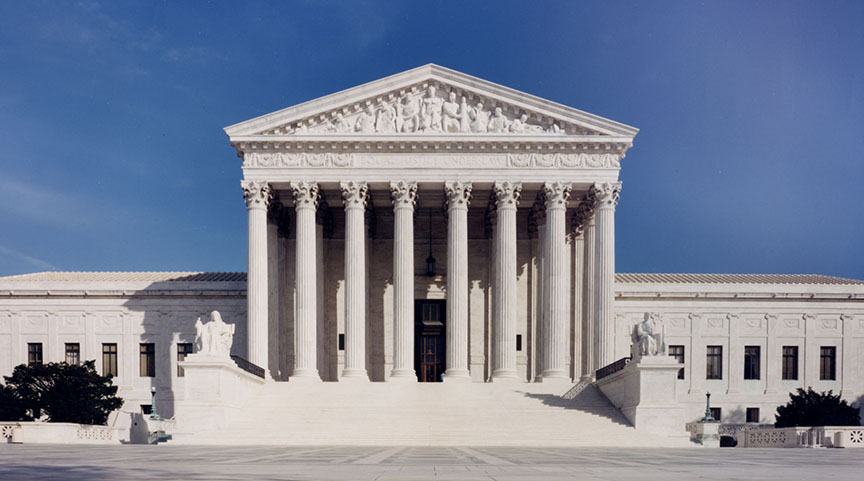
Virginia Attorney General Jay Jones and other Democratic leaders filed an emergency application to the U.S. Supreme Court on May 11, asking the justices to let the state proceed with the congressional redistricting map approved by voters.
On May 8, a 4-3 ruling by the Virginia Supreme Court found that the constitutional amendment put forth by Democratic legislators was unconstitutional due to a procedural issue. That ruling came out after millions of Virginians voted for the amendment in a special election on April 21.
The redistricting map would have enabled the Democrats to pick up four seats in the U.S. House of Representatives. The map was redrawn in response to redistricting measures in other states that favor Republicans.
As a result of the Virginia Supreme Court ruling, the existing congressional districts will stay in place. Democratic candidates are now focusing on campaigning hard to win in the midterms in November. There’s a chance Democrats could flip a couple of Republican districts under the current map.
Related story: State Supreme Court strikes down redistricting amendment
The chances of the U.S. Supreme Court being willing to restore the redistricting map don’t appear to be great following recent decisions to gut the Voting Rights Act and uphold a Republican-initiated redistricting measure in Louisiana.
In addition to Jones, the application to the Supreme Court was submitted by Speaker of the Virginia House of Delegates Don Scott, Virginia Senate Majority Leader Scott Surovell, and President Pro Tempore of the Virginia Senate L. Louise Lucas.
The applicants ask the Supreme Court to immediately impose an administrative stay of the May 8 ruling pending a petition for writ of certiorari, and if the writ is granted, pending a resolution of the case on its merits.
The Virginia Supreme Court invalidated the constitutional amendment based on a definition of “election.”
For a constitutional amendment to be adopted in Virginia, it must be passed in the legislature twice, with a statewide election occurring in between.
The Virginia Supreme Court found that the first passage of the amendment, on Oct. 31, 2025, came too late and was thus invalid, because early voters had already cast ballots for the Nov. 4 election.
The General Assembly approved the proposed constitutional amendment a second time on Jan. 16, 2026.
The court determined that the term “election” encompasses the entire period of early voting, beginning in September, rather than a single day.
“By rejecting the plain text of the Virginia Constitution’s definition of the term ‘election’ to adopt its own contrary meaning,” the application by Jones states, “the Supreme Court of Virginia transgressed the ordinary bounds of judicial review.”
If the Supreme Court fails to enter a stay of the Virginia Supreme Court’s ruling, the application says, the state would be forced to hold an election in November “using a congressional map other than the map authorized by the constitutional amendment and adopted by the General Assembly.” And that would cause “irreparable harm” to voters, candidates, and the Commonwealth.
The application says the decision by the Virginia Supreme Court “amounts to a judicial defiance of the Commonwealth’s Constitution and the statutes enacted by the General Assembly lawfully establishing congressional districts to be used in the upcoming 2026 election.”
Jones also argues that the state Supreme Court’s decision was based on a “grave misunderstanding” of federal election law.