
A fix for Lake Accotink is years away
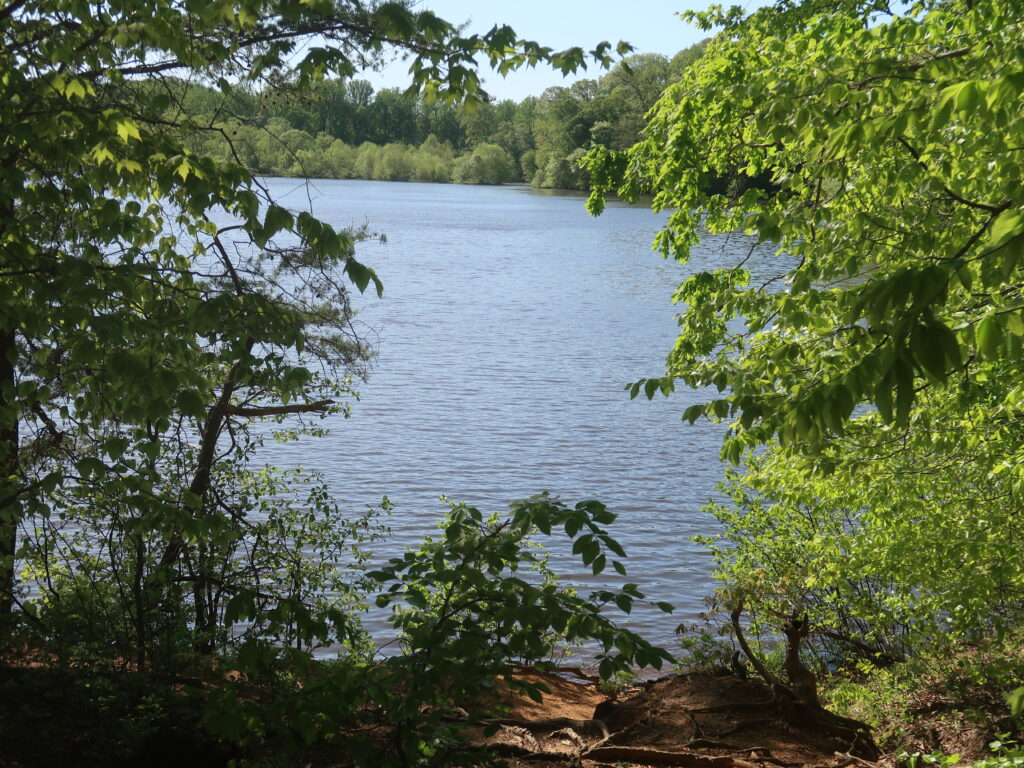
Three studies are underway on Lake Accotink, but it’s going to be years before any action is taken to preserve the lake at a smaller size.
The Smaller Lake Accotink Preservation Study was launched in April by Arcadis under contract to the Fairfax County Department of Public Works and Environmental Services. A sedimentation study and an assessment of the dam are ongoing.
The public got a chance to learn about those studies and talk to experts at an open house on July 19 at Kings Glen Elementary School in Springfield.
A smaller lake
The Board of Supervisors authorized the studies in January 2024. The objective is to determine whether reducing the lake to 20 to 40 acres and letting wetlands develop in the remaining lake area would be a sustainable solution to prevent the need for costly dredging operations every few years.
Lake Accotink is currently 55 acres, but is filling in with sediment, making it much shallower than it had been in the past. Without extensive dredging or an alternative solution, it will eventually disappear.
Related story: Supervisors call for more studies on Lake Accotink
The goal of the feasibility study is to “maximize the recreational and aesthetic value of the lake and to develop a plan for maintenance over the long term,” said Amanda Kohler, an environmental engineer at Arcadis.
At the open house, Arcadis representatives laid out three options for a smaller but deeper section of the lake at 18, 19, or 28 acres.
Some of the sediment dredged to form a smaller, deeper lake would be used to create wetlands or islands. But the rest of it will have to be deposited somewhere else. It will be challenging to find an appropriate location for depositing the dredged materials.
Kohler said the first version of a report outlining Arcadis’ recommendations is expected to be released in mid to late 2026.
In forming its recommendations, Arcadis will review the sedimentation study being carried out by the U.S. Geological Survey.
Sediment study
The USGS is about a year into a three-year data-collection effort, said Spencer Tassone, a biologist at the agency’s Virginia-West Virginia Water Science Center.
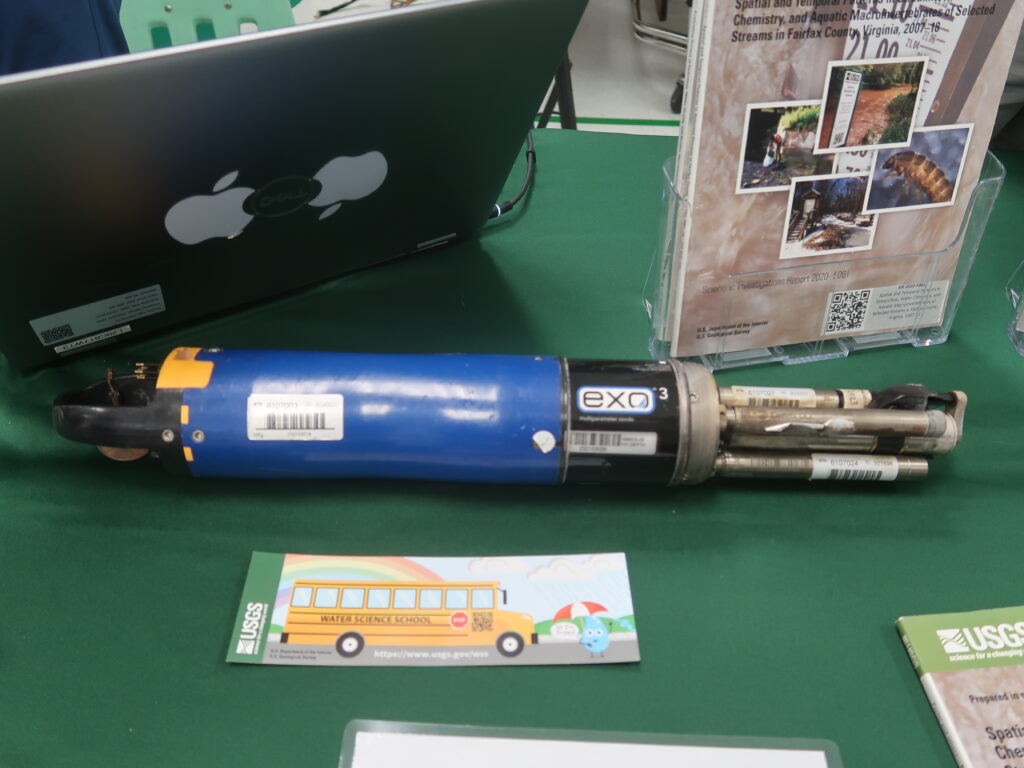
USGS is collecting data on the amount of sediment flowing into and out of the lake and how fast it’s moving.
The agency is using sensors called sondes that are embedded in two sites upstream, at Long Branch and Accotink Creek, and one below the lake near Old Keene Mill Road.
The data is sent via satellite to a website. After the USGS gets enough data, the study will move into the analysis phase.
The dam assessment
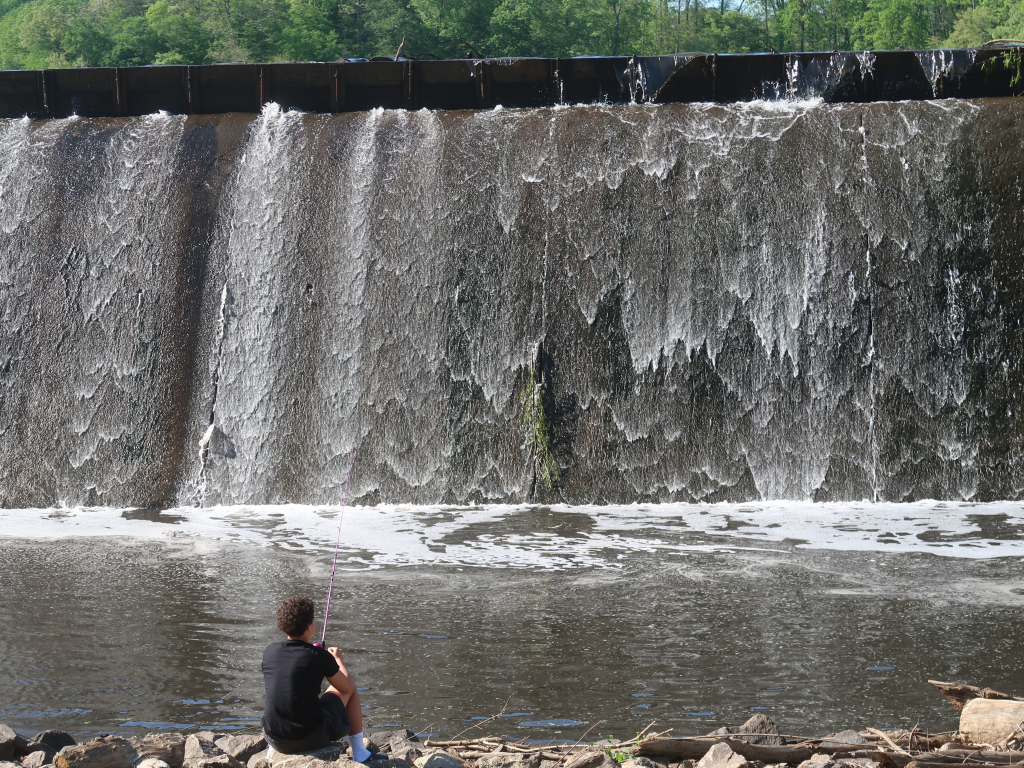
The dam assessment project calls for lowering the water level in Lake Accotink so the structure of the dam can be inspected and fixed.
That work has undergone repeated delays, as problems were discovered and dealt with, said Alex Burdick of the Park Authority’s Planning and Development Division.
Related story: More transparency needed on Lake Accotink preservation study
The dam assessment started last September with the installation of a fence around the project site. When divers inspected the intake in October, they found it clogged with debris, including a huge truck tire and other tires, Burdick said.
Removing the debris caused a delay in opening the sluice gate. The plan called for using a hand crank to open the gate to gradually draw down the water level in the lake, he said. Then a squall hit while divers were in the lake, causing another delay. Operations were paused again in the winter when the lake froze.
When the project resumed in March, divers found the sluice gate wasn’t working properly, so they couldn’t draw down the water.
Fixing the gate required the custom fabrication of a new hand crank, which has finally been installed.
Related story: Lake Accotink is being drained for an evaluation of the dam
The Park Authority will continue the dam assessment after Labor Day, so as not to disrupt recreational activities on the lake during the summer, Burdick said.
The drawdown will reduce the water level to about three and a-half feet. Now, the deepest areas are six to eight feet, he said.
The next step calls for workers to empty the stilling basin at the foot of the dam. After the concrete dries, structural engineers will assess it for spalling. It they find weak spots, they will submit recommendations for repairs along with cost estimates.
Depending on how bad it is, there could be further studies, Burdick said. “It could be a long time before it’s fixed.”
Related story: No more pedal boats at Lake Accotink