
An urbanist shares thoughts on Annandale
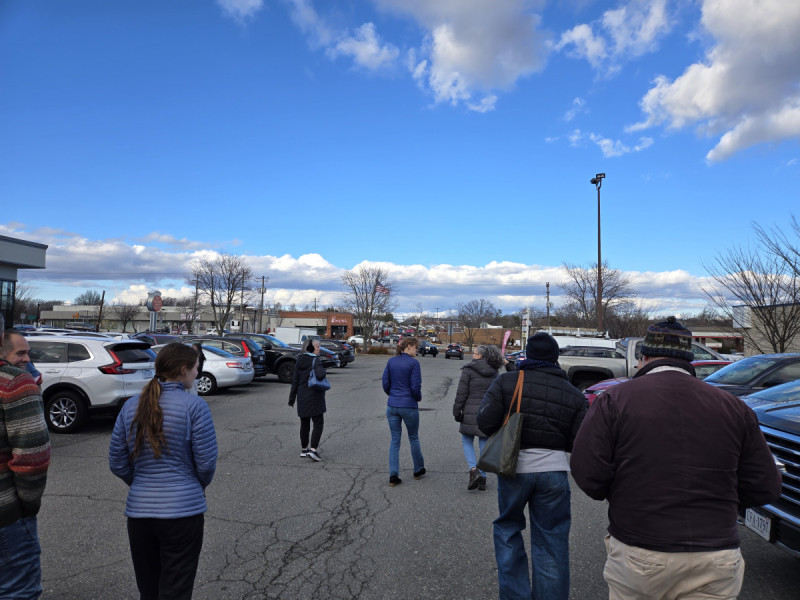
After taking one of Mina Kim’s Virginialicious tours of Annandale’s Korean restaurants, a writer focusing on the built environment found Annandale culturally interesting but challenging for pedestrians.
The following article is reprinted from “Greater Greater Washington.”
How to appreciate an aging suburb, one bite at a time
I was the only person there for whom this was their second walk through Annandale, Virginia’s aging, car-oriented commercial district. What can I say: I find old, culturally interesting suburbs fascinating. So does Mina Kim, a Korean-born Virginian who founded the small food tour company Virginialicious in April 2024.
It was a chilly, windy afternoon – thankfully not raining – and I was observing a Virginialicious walking food tour of Annandale’s Korean restaurant scene. I read about Virginialicious in a December 2025 Northern Virginia Magazine article. Kim’s idea, and its idiosyncratic mix of business and culture in Annandale, an atypical environment for such an activity, caught my interest. I went on one of the tours to observe, which Kim comped for me.
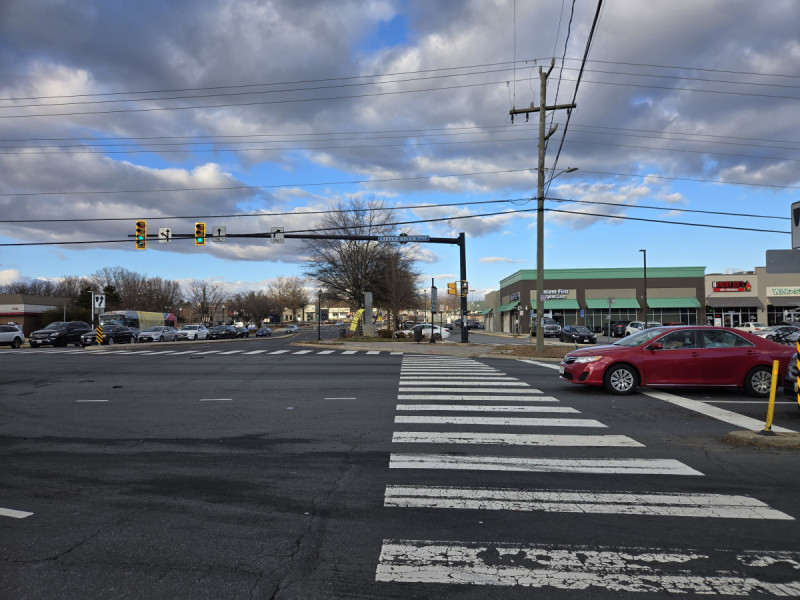
Annandale is an intimidating place to walk, and an unpleasant area to drive. Despite the Annandale Village Center signs, the area’s commercial heart is an assemblage of old strip plazas, small commercial structures on odd lots, highways, and lots of parking. It’s a typical, almost prototypical, old American suburb.
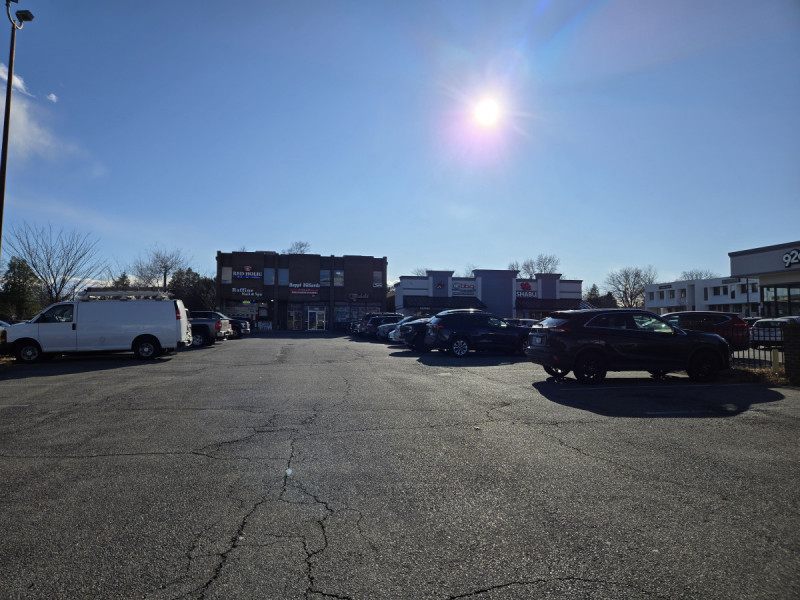
Annandale is also home to one of America’s largest Korean American populations. The Washington region overall comprises the third-largest Korean American community in the U.S.
Nearly 60 percent of the businesses in Annandale’s central commercial district are owned by Korean Americans. Some of the residents, Kim says, don’t speak English. This element of insularity goes both ways: Many non-Korean Americans, even locals, are unaware of Annandale’s unique Korean culture and food, or any of its other immigrant groups.
Kim estimates that about a third of her tour customers are unaware of Annandale’s Korean food or community; a third are passingly familiar with it, but a bit intimidated to try unfamiliar restaurants alone; and the remaining third want to learn more from someone who can guide them.
Her breakdown of locals versus long-distance patrons is even more dramatic: As many as 95 percent of Virginalicious tourgoers are from the Washington region. My own tour consisted of two Marylanders, one of whom had recently moved from Los Angeles’ Koreatown neighborhood, while the rest of the patrons, like me, were Virginians.
Related story: Food tours introduce residents to Annandale’s Korean restaurants
Some people would become impatient having their cultural knowledge constantly drawn on like this. But that’s the basis of Virginialicious, and Kim, along with friend and sole employee Sujin Park, loves it.
“Ever since I moved to the U.S. in 2012, my friends and family here have asked me so many times, ‘Hey, Mina, what should I get at this Korean restaurant?’ ‘Would you like to come to this restaurant with us (so you can order everything for us and explain things too)?’”
“The more I went out and hung out with them as a go-to Korean food ‘guide,’” Kim says, “the more I loved it.”
The tour itself is simple and low-budget, but excellently executed. A walking tour is an intimate affair that allows you to experience this car-oriented place in all of its quirky, easy-to-miss detail. But it also cuts down on the necessity of owning, operating, and insuring a van, and – for larger vans – the necessity of the operator holding a commercial driver’s license.
“Nobody really walks in Annandale”
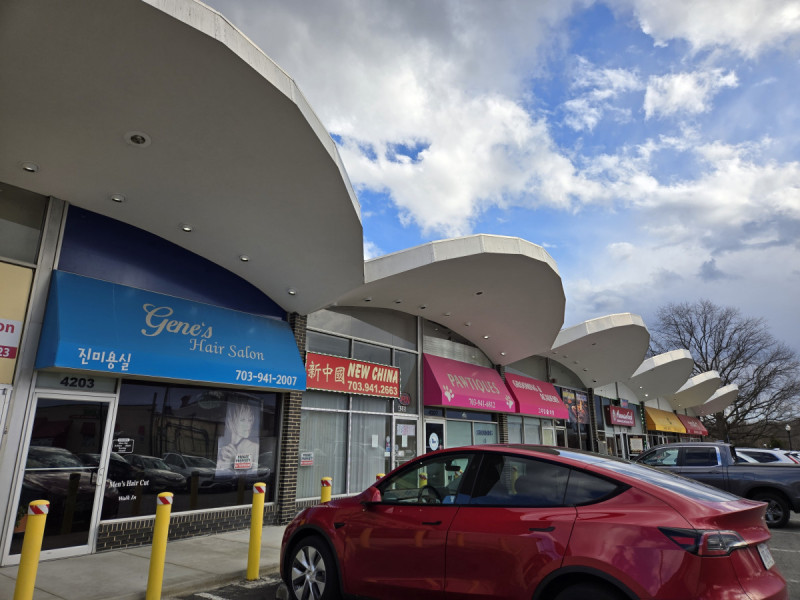
I parked my car with a touch of anxiety as to whether I was really allowed to park and walk off. We met under the awning of a little old strip plaza with a Space Age flying saucer facade and started with a snack at a Korean deli, which makes assorted treats and banchan in-house and presses its own sesame oil. Park, who ran my tour, said that this unassuming Korean deli is the oldest operating Korean-owned business in Annandale.
As we crossed roads and meandered through parking lots, Park observed that “nobody really walks in Annandale.”
“Walk like kindergartners,” she said playfully, but wasn’t joking. At one point, two or three cars had to back out of a crosswalk for us. We walked past a construction site, which once housed The Block, an Asian food hall in part of an old Kmart plaza. We walked along a retaining wall. Some of the restaurants don’t resemble restaurants: One is in what looks like an office building off the main drag, while another is down a set of stairs.
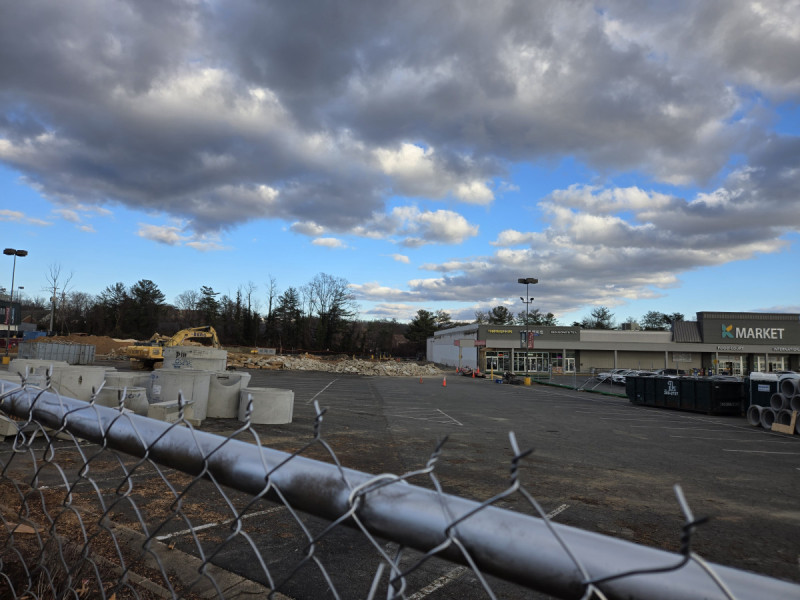
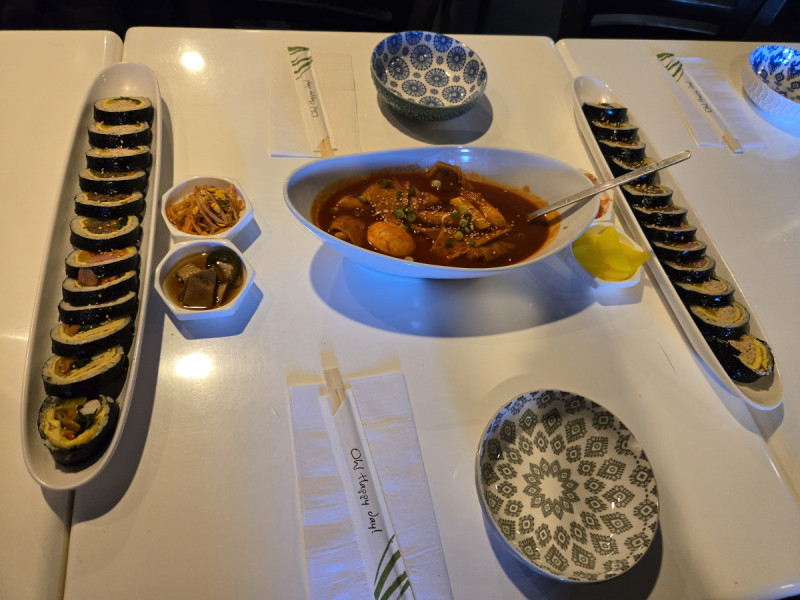
This exposure to the elements and automobile traffic is a bit unnerving, but it was a good setup for the – largely, but not entirely – warm, rich, spicy dishes we tried, all of which were served in generous portions and came with explanations, stories, and discursions on Korean culture.
My personal favorite was a comfortable Korean family restaurant – which felt like an old-school pancake house – where we tried Korean Chinese food. Park explained it was similar to the wonderfully greasy, delicious comfort food takeout of Americanized Chinese food. It’s different, but just as delicious.
Annandale as a destination
Kim wants Annandale, and its Koreatown, to be a tourism destination in and of itself. In the same way that people go to DC for a day, she wishes people would spend one day of a long weekend out here.
Perhaps the necessity of either navigating a series of small, separated parking lots on crowded local roads, or figuring out where to park for half a day and milling around alone would hinder that possibility. Annandale looks like one of those places that is ripe for redevelopment, but its quirky built form is “part of the charm,” Kim says. And its ordinariness might be key to its cultural interest.
One business which was previously on the Virginialicious tour route tried to modernize and go upscale – and ended up going out of business, according to Kim. In a way, that’s a parable for what can happen when an aging but culturally complex place is suddenly reinvented.
“I don’t want Annandale to be fancy,” Kim says. “But I don’t want it to be so uncared for that people can’t even walk.”
While her goal isn’t to get rich, there’s one element of self-interest at play: Kim wants these small restaurants and shops to survive so she “can keep coming back.” She once ran into some of her tour participants drinking somaek (soju and beer) shots at one of the restaurants – a “proud mama moment.”
The idea of a walking food tour in suburbia is novel and, as a travel or experience product, almost unheard of. Yet, this business idea and labor of love from an immigrant is a particular illustration of a general point: In the Washington region and many other U.S. metro areas, much of the immigration, food culture, and general human interest is now taking place outside of the legacy cities.
Food as a gateway to urban suburbia
The questions that occupy urbanists – of placemaking, economic opportunity and entrepreneurship, housing affordability, the tensions between new development and deeply settled places, the phenomenon of aging suburbs subtly becoming the most dynamic places in many metro areas – are all here, being explored and experienced on the ground.
Is it possible to preserve the spirit of places like Annandale while making outward improvements to their form? We learned from urban renewal that dramatic redevelopment isn’t an answer to physical decay. And we know from observing these older suburbs that a sense of physical decay is not a reflection of the cultural and economic vitality of a place.
Related story: ‘Seoul Boulevard’ signs installed on John Marr Drive
That’s the paradox of mature suburbs: In some ways, their no man’s land form is precisely what has made them into complex, interesting, layered places full of opportunity. To treat them as blank slates would be like killing the goose that laid the golden egg.
One day, of course, the postwar commercial buildings will reach the end of their life. Immigrant communities grow, mature, and disperse. The spirit of a place like Annandale will endure somewhere, but how and where it manifests will change.
These are hazy concepts to explain, especially to somebody with no background in urbanism. And many urbanists and suburbanites alike underestimate the cultural interest and economic opportunity of suburbia today. Food is an easier place to start.
Addison Del Mastro is a full-time writer who explores the history, culture, and design of the built environment, with a focus on the Washington, D.C. metro area. He is proud to live in Northern Virginia and lives with his wife in Reston. He writes daily in his newsletter, The Deleted Scenes.
Definitely tried many Korean (and other ethnic) restaurants in Annandale, but I’d guess I’ve gone to less than 5%. So many are hidden away. I’d recommend Lighthouse Tofu in the buildings behind Burger King for some tasty (beyond the common to outsiders K BBQ and Fried Chicken – which are good as well). Soups during cooler season really warm you up (obviously spicy plus being steaming).
Great article!
Great article! Getting visions of the late great LA Times food critic Jonathan Gold.
We are blessed with food options! I’ve enjoyed O My Hot Pot and Gom Shabu for hot pot, Han Gang for barbecue (and all the kids know Honey Pig BBQ because it’s open all the time), Sorak Garden for Korean/Asian buffet and sushi, Taco Ssam for Asian-Mexican and Breeze, Tous les Jours and Shilla bakeries for Korean baked goods.
We’re also blessed to have three Japanese restaurants in one shopping center: Kajiken Ramen and the adjacent soft ice cream parlor with green tea specialties, Akeno with its artistic and delicious cocktails and mocktails, artfully presented sushi and bento boxes, and Meko which I haven’t tried yet. And there’s Yamazato, known for excellent sushi, with Japanese and Thai food.
We also have counter service Mediterranean: Bitez & Basil, Food Corner & Yummy Kebab; Chinese: Hunan Kitchen, Duck Chang’s, Szechuan Star, and in Culmore the fabulous Peking Gourmet; Indian: IndAroma and Raaga: Pupusas Express; Tacos: Taco Zocalo (birria tacos to die for), Taco Rock, Taco Bamba, Moe’s and fusion Taco Ssam. Nearby Ethiopian: Dama, Meaza and Enat; Afghan: Bamiyan and Kabobistan, meat heavy Iron Age and the Great American Restaurant’s Silverado. I haven’t been to Lighthouse Tofu but have heard great things about it. Also a neighbor recommended the banh mi at a Vietnamese place on Markham and there’s a couple of Pho restaurants and Chay Vietnamese.
Of course we have all the usual fast food chains for the rushed and unadventurous.
What are your favorites?