
Meals tax takes effect on Jan. 1
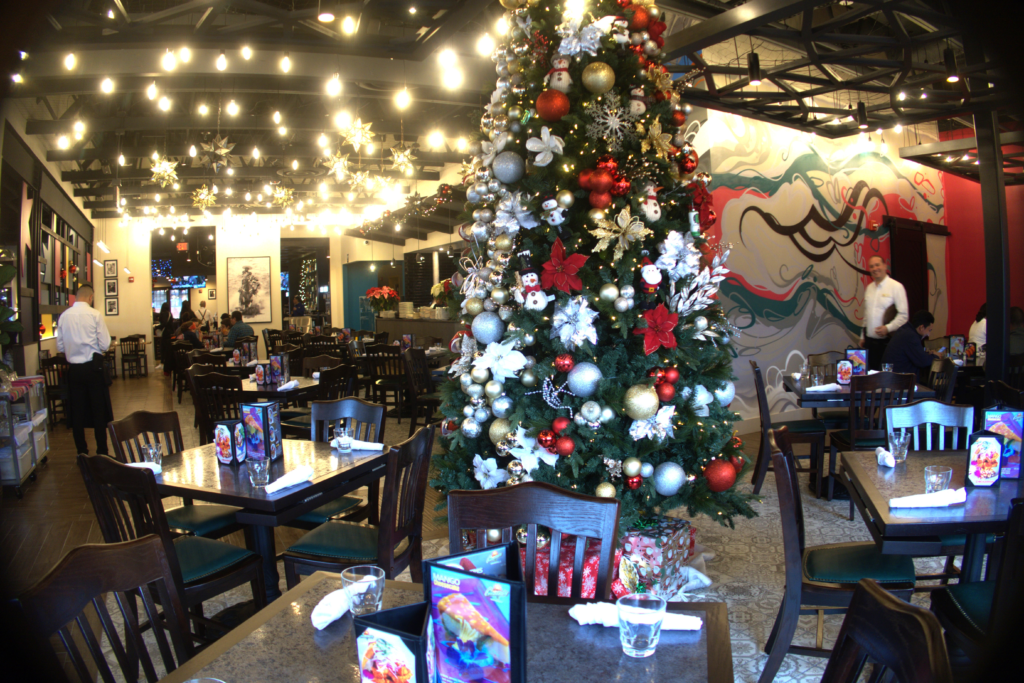
Dining out will get a little more expensive on Jan. 1. That’s when Fairfax County’s new meals tax takes effect.
The Board of Supervisors approved a 4 percent food and beverage tax in May. The tax applies to prepared meals and beverages sold at restaurants, cafes, bars, bakeries, food trucks, and other establishments that offer ready-to-eat food and drinks.
Take-out meals, including items prepared in the county and delivered elsewhere, are taxed, as well as meals consumed on site.
The meals tax does not apply to grocery items, food and drinks sold from vending machines, pre-packaged snacks and desserts, or alcoholic beverages sold in factory-sealed containers for off-premises consumption.
The Board of Supervisors established the meals tax to generate additional revenue and reduce reliance on real estate taxes, which generate most of the county’s general fund revenue.
Related story: Board of Supervisors to hold a hearing on a proposed meals tax
The tax is expected to generate approximately $65 million in FY 2026, with about one-third of the revenue coming from diners who don’t live in Fairfax County.
The county’s meals tax does not apply to meals purchased in the City of Fairfax or the towns of Clifton, Herndon, or Vienna, as those jurisdictions already have their own meals taxes.
Most neighboring counties and towns already charge a tax on prepared foods and meals, ranging from 3 to 5 percent.
Fairfax County voters rejected meals tax referendums in 1992 and 2016. In 2020, the Virginia General Assembly enacted a law giving county governments the authority to impose a meals tax without the need for a referendum.
Restaurants and other businesses that sell or deliver prepared food and beverages are responsible for collecting and remitting the tax and maintaining adequate records.
The Fairfax County Department of Tax Administration is hosting two virtual workshops on the meals tax for businesses:
Businesses must remit the food and beverage tax to the Department of Tax Administration on or before the 20th of each month. The first filing and payment is due on Feb. 20.
Failure to pay by the deadline will result in a penalty of 10 percent of the tax due. Businesses that file and remit the tax on time may retain a seller’s discount of 3 percent of the collected tax amount.
The BoS said that they established the meals tax to generate additional revenue and “reduce reliance on real estate taxes”. Baloney. This will have no effect on real estate taxes. It is more revenue plain and simple. This BoS never has enough money for their outlandish spending plans. More taxes to come because they still don’t have enough money for them to spend (and never will until they are voted out).
Voters should be asking why they were stripped of their right to vote on a meals tax by referendum.
Sparky, voters don’t need to ask this question because we know the answer.
Voters already rejected the meals tax by referendum twice, and they would have rejected it again if they had the opportunity to vote on it by referendum.
This decision needed to be made by the Fairfax County Board of Supervisors because they know better than the voters what is best for the residents of Fairfax County.
Prosperous New Year to everyone as we need it to live here. The county especially needs a prosperous year to pay for the tax and spend policy and priorities of the Fairfax Board of Supervisors and the special interest groups that have helped to elect them. We all have a reckoning coming that will be painful, as the spending habits are impacted by federal government job losses, federal contractors job losses, less federal spending in general, unrealistic regulations that harm small business and favor large businesses that can easily relocate, and the inevitable slowdown in the economy and potential home value reductions. Making hard choices on what to spend taxpayers money on is required but unfortunately is unlikely as the Board of Supervisors thrives on taxes & spending.
Just a few years ago we could order a beer and appetizers and hang out for under $12. I just spent $25 on coffee and a cookie at a Fairfax cafe. Is this why? Seems like I could sell bespoke graham crackers to Fairfax residents for $15 a square and that will pay for all the art projects and traffic circles etc.
Describing this new meals tax as making dining out “a little more expensive” is disingenuous framing. It minimizes the impact of a deliberate policy choice by treating the added cost as trivial, when dining out in Fairfax County is already expensive due to inflation, service fees, sales tax, and tipping. Adding another 4 percent on top of an already inflated baseline is not marginal for many residents, particularly when the increase is experienced repeatedly, not occasionally.
Percentages are especially misleading in this context. Four percent sounds small in isolation, but when applied to meals that already carry multiple add-ons, it meaningfully increases the total cost. For households that eat prepared food several times a week, the impact compounds quickly. Language that softens this reality does not inform the public; it obscures it.
More importantly, the framing assumes that dining out, especially fast food, is a discretionary luxury. For many residents, that assumption is simply false. A large number of people rely on fast food and prepared meals not for indulgence, but because time is their most limited resource. Workers putting in 10-hour days, holding multiple jobs, managing long commutes, or balancing work with caregiving responsibilities often do not have the time or energy to cook every meal. For them, prepared food is a practical necessity, not a lifestyle choice.
A meals tax therefore functions as a tax on time scarcity. It disproportionately affects people whose schedules are least flexible and whose incomes are least able to absorb repeated incremental costs. That makes it regressive in effect, regardless of how it is described. Grocery shoppers are exempt, but those who must trade money for time are not.
There is also an unavoidable democratic concern. Fairfax County voters rejected meals taxes in two separate referendums. While state law now permits the county to impose such a tax without voter approval, legality does not erase the fact that residents clearly expressed opposition when they were asked directly. Calling this merely a revenue adjustment sidesteps that history.
Finally, claims that the tax will reduce reliance on property taxes should be treated with skepticism. Without corresponding spending restraint, new revenue streams historically supplement existing taxes rather than replace them. Residents are left paying more in daily transactions while being told they are receiving relief elsewhere.
At minimum, public communication about this tax should be honest. This is not a minor price adjustment. It is a new consumption tax that increases the cost of everyday meals for people who are already stretched for time and money. Pretending otherwise does a disservice to the public and to the seriousness of the policy decision being made.
Thanks so much to the board for completely ignoring the public and how they voted twice in regards to this tax. It just shows how they care about public opinion.
I now limit myself to dining out. To
Think we have a BoS that makes decisions for us is disheartening when twice voted down. Sadly the servers will
Get 4 percent less in their tip. That is happening already. We all got screwed.
The county’s meals tax does not apply to meals purchased in the City of Fairfax or the towns of Clifton, Herndon, or Vienna, as those jurisdictions already have their own meals taxes.
Most neighboring counties and towns already charge a tax on prepared foods and meals, ranging from 3 to 5 percent.
DO YOU EAT OUT at the above mentioned jurisdictions? If you do, then you are paying meal tax there already. And you are supporting those jurisdictions and why not support your own? BTW, Arlington county also has a meal tax.
If I pay meal tax when dinning at City of Fairfax, Town of Clifton, Vienna, Herndon and Arlington; it is only fair that the neighboring residents pay our meal tax when they dinning out at our jurisdiction!