
Music is the key to addiction recovery
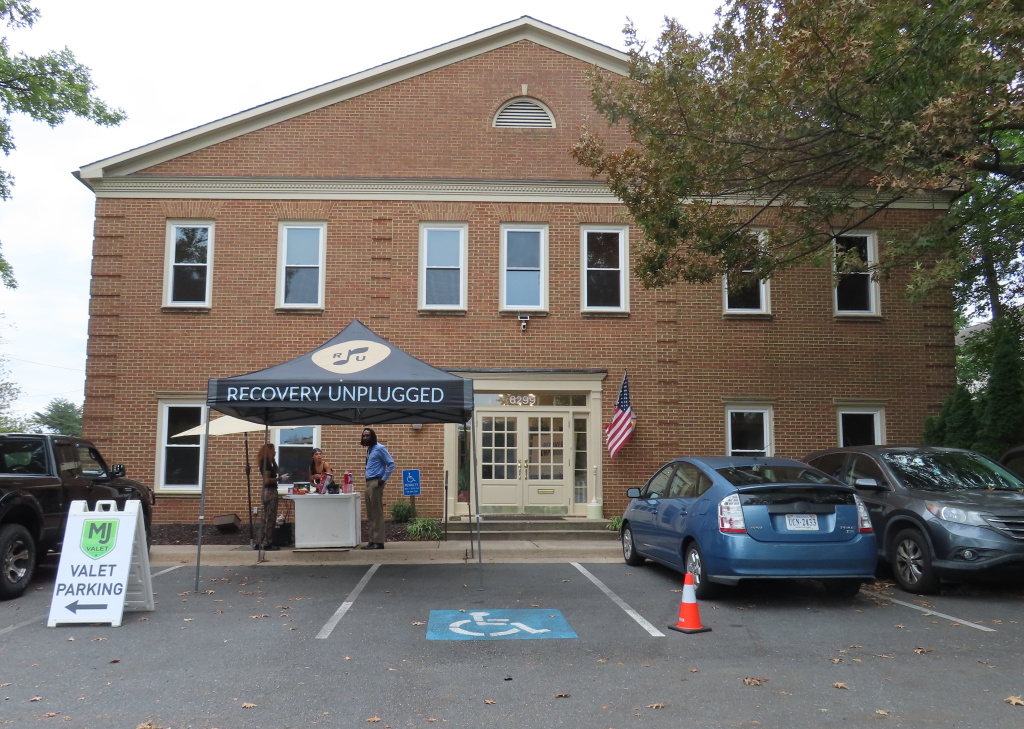
Recovery Unplugged, a new addiction treatment center in Seven Corners, uses music as a catalyst to help people change their lives.
The center offers holistic treatment for mental and behavioral health, as well as detox for addiction, said Riley Osborne, the company’s chief growth officer, at an open house on Sept. 30.
Recovery Unplugged treats people addicted to cocaine, alcohol, meth, heroin, kratom, or other drugs, but also recognizes that addicts tend to have underlying mental health issues, such as anxiety, trauma, bipolar disorder, PTSD, or personality disorders.
“No one is just struggling with addiction,” Osborne says. People with mental health issues are often self-medicating with drugs or alcohol. “We’re giving people the second, fifth, or 12th chance to succeed at life.”
Music as treatment
“Music is the key to recovery,” says Osborne, who got hooked on opiates after surgery to treat an injury from playing college football. In December, he will mark his 12th year of being drug-free.
“Music is medicine. Music speaks emotions where words fail,” he says. “It brings people together and gives them an opportunity to reconnect.”
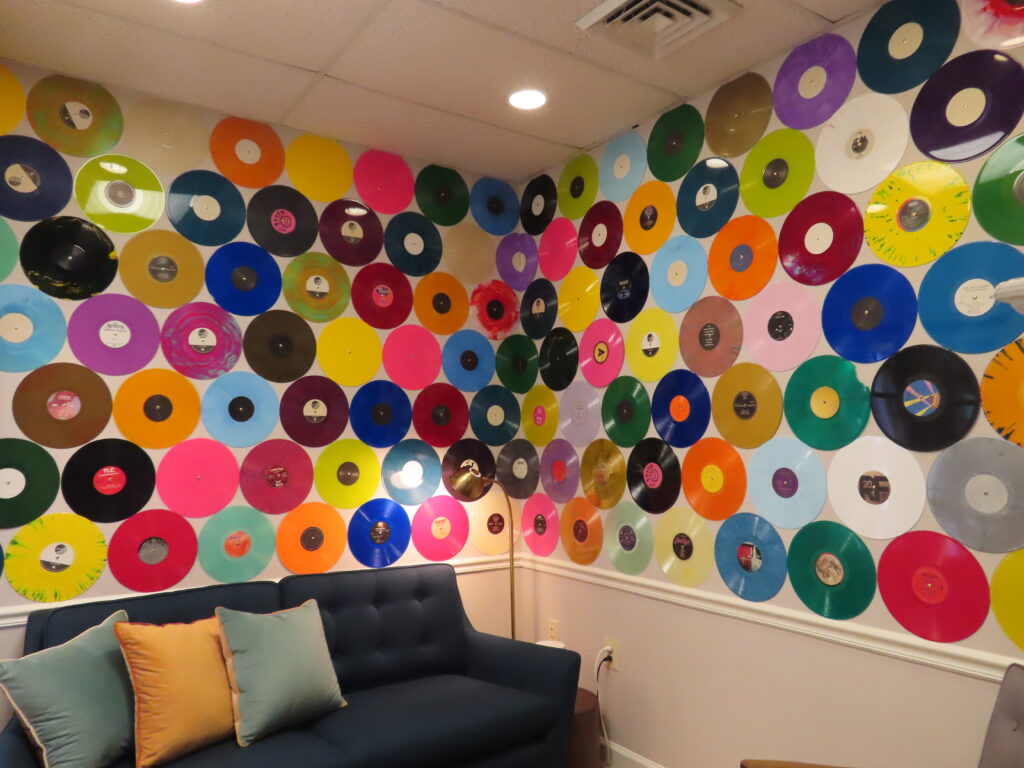
One of the activities at Recovery Unplugged is “lyric analysis,” where clients break down the lyrics in a favorite song and “dive into what the artist is trying to communicate,” he says.
Every week, there’s Tune in Tuesday, where Recovery Unplugged alumni come to the center to jam with current clients.
The center brings in a band for “Feel Good Friday” for a two-and-a-half-hour session that shows clients they can be “joyous and free, even in recovery,” Osborne says.
Related story: Music-focused addiction recovery center to open in Seven Corners
A “sound bathing” experience at the open house demonstrated how music can support relaxation and openness.
Successful musicians have performed at Recovery Unplugged centers, including Steven Tyler, Gene Simmons, Flo Rida, and Jelly Roll. Osborne notes that Adam David, the most recent winner of “The Voice,” came through Recovery Unplugged six years ago and comes back to perform.
A success story
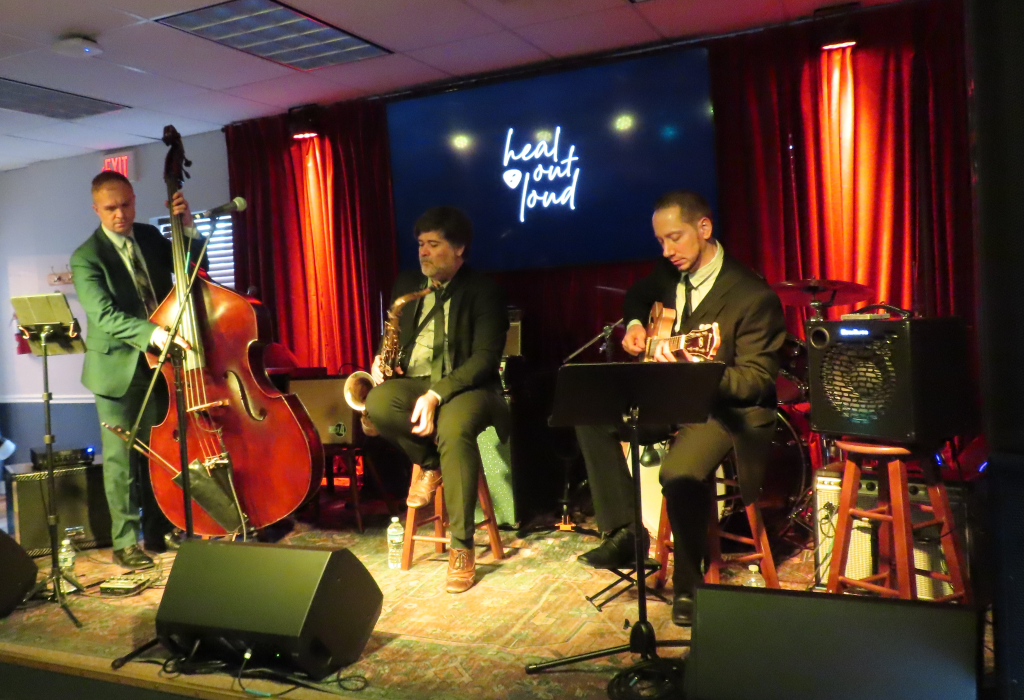
Music has been a big help to Matt W., an alumnus of Recovery Unplugged, who came back to play the guitar at the open house.
He had been struggling with bipolar disorder and ADHD and was using weed, alcohol, cocaine, and “whatever I could use to change my head-scape. I was seeking an escape by any means possible.”
After searching unsuccessfully for 10 years for a way to deal with his mood disorder, he says, “Recovery Unplugged offered me a route to wellness, with music involved every step of the way.”
“The community here has made me feel like a human, and reminded me to take music more seriously,” Matt says. He still comes back every Thursday for meetings and returns on Fridays to play the guitar with other alumni and clients. He is training to become a peer recovery specialist.
A holistic approach
There are 11 Recovery Unplugged centers around the country, including one in an office park behind the Backlick Shopping Center in Annandale.
The centers offer a “whole human wellness approach,” Osborne says. The staff includes physicians who can prescribe medications and treat physical ailments, such as diabetes; a psychiatrist, nurses, and other medical professionals.
The center in Seven Corners is currently treating about 100 people on site. Another 60 from across the state are receiving telehealth services.
The program offers a “partial hospitalization program” (PHP) and “intensive outpatient counseling.” People in the PHP program spend six hours a day at the center six days a week for six weeks.
While going through the program, clients live in one of the five “sober living” homes operated by Recovery Unplugged. The homes are staffed 24/7, and residents pay rent.
Recovery Unplugged guides people to whatever approach makes sense to them, Osborne says. “There are many rivers to the ocean of sobriety. We tell clients to find their own version of recovery.”