
Business spotlight: Shadow Combatives
Annandale Today has a new feature, “Business Spotlight,” offering brief posts about local businesses in the Annandale/Mason District area. If you would like to have your business highlighted, contact us at [email protected].
Shadow Combatives, a martial arts school in Annandale, teaches a variety of martial arts techniques focused on self-defense.
“We offer two types of programs, unarmed hand-to-hand combat and instruction in 20 different types of weapons,” says Omar Gilani, founder and head instructor (sensei).
Gilani has been teaching martial arts since 2015 and opened Shadow Combatives in 2023 at 6930 Little River Turnpike, Suite A, where it shares space with Ka Karate.
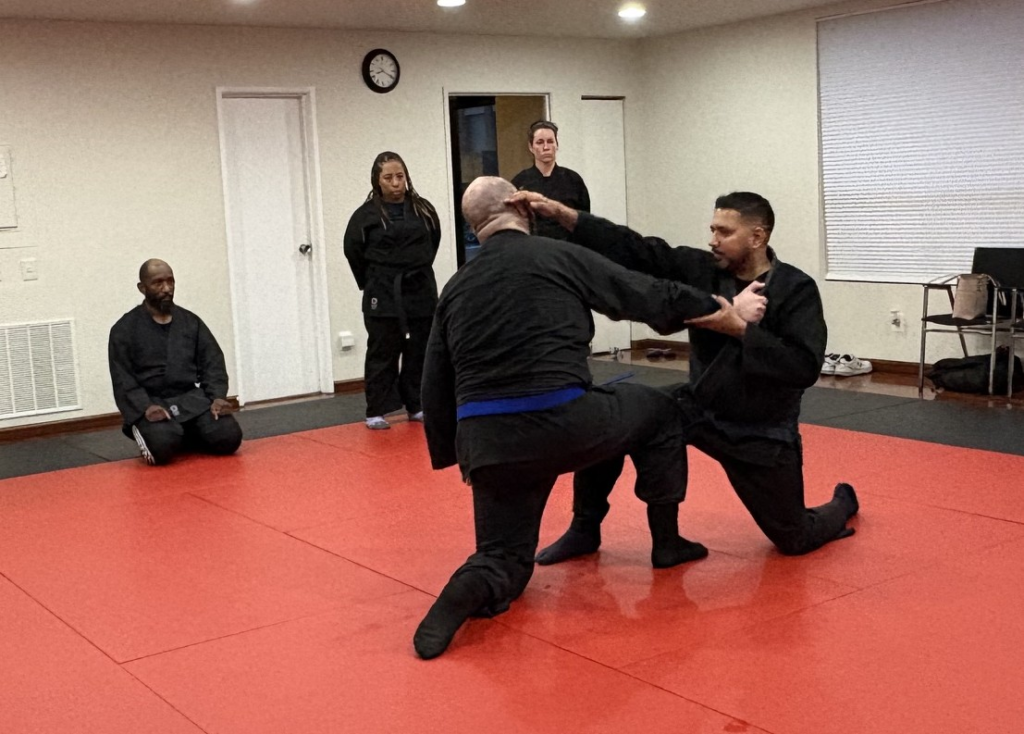
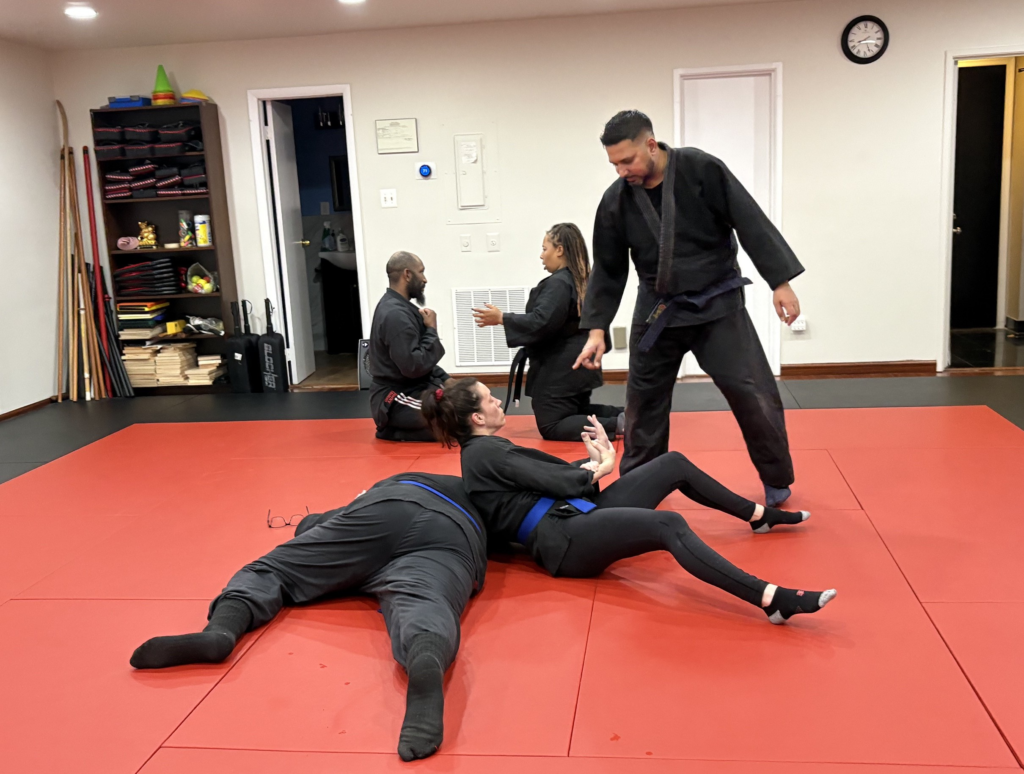
The program teaches students how to use punching, kicking, throwing, grappling, pinning, restraining, and other skills to defend themselves from an attacker. What makes Shadow Combatives different from other self-defense courses is that “we teach real martial arts, ultimately to get to a high level,” he says.
Their main program is Japanese jujitsu, which differs from Brazilian jujitsu in that it uses more moves and doesn’t have rules or weight classes. Shadow Combatives is the only school in the area that teaches Japanese jujitsu.
While the training at Shadow Combatives is similar to mixed martial arts, there’s no sport mindset, Gilani says, and it’s not just for highly conditioned athletes. His students aren’t preparing to compete. The assistant instructor, Rocky Melton, however, has won many tournaments and is in the martial arts hall of fame.
Gilani has extensive training in various martial arts, including Japanese and Brazilian jujitsu, ninjutsu, taekwondo, boxing, kenjutsu, bojutsu, and yarijutsu.
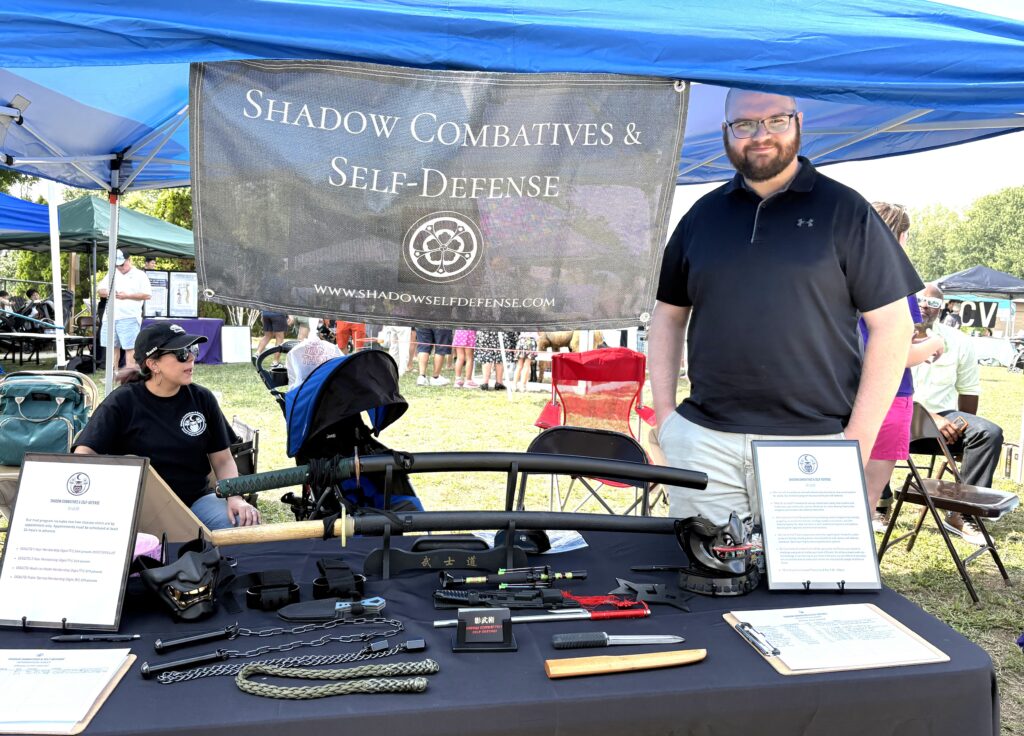
The training at Shadow Combatives includes techniques from ninjutsu, from the ninja tradition. “It’s a common misconception that ninjas are merely hitmen,” Gilani says. “We don’t actually push the whole ninja side much. It draws a lot of negative attention. People think it’s about anime, about playing make-believe,” he says.
“The reality is ninjas were samurai with additional capabilities and were primarily spies.” He compares them to the elite forces of today, such as Navy SEALS.
The weapons training offered at Shadow Combatives includes the sitana (sword), wakizashi (short sword), bo (wooden staff), yumi (bow), yari (spear), naginata (halberd), shuriken (throwing stars), kusari nawa (weighted rope), manriki gusari (weighted metal chain), kusurigama (sickle and chain), tanto (knife), and shuko (hand claws).
Related story: Business Spotlight – GoGoPhoto
Most of the students at Shadow Combatives are women; the current average age is 35; previous student ages have ranged from the early 20s to the 60s.
Gilani got into fighting when he was a child as a response to being bullied. “As a South Asian in New Jersey, I stuck out like a sore thumb. The kids liked to pick on anyone who looked different. I had no confidence in speaking. I was the perfect target.”
After his parents signed him up for taekwondo, he became hooked on martial arts, drawing inspiration from Jean-Claude Van Damme and other action stars.
Over the years, Gilani found his martial arts training useful in real-life situations. In one example, he broke up a fight at a hookah lounge in Springfield started by a disgruntled ex-employee who was about to throw a metal cordon post at someone.
“I threw him on the ground and held him in a calm position with just enough pressure to destroy his spirit, not his body,” Gilani recalls. “He finally walked away.”
At another time, Gilani de-escalated a situation at a different lounge when a drunk customer, angry about the bill, started picking up things and throwing them behind the counter.
“The situation was spiraling downward; it was starting to get physical,” he says. “I asked the person to calm down, put him into a choke hold, and asked someone to call the cops. He came back at me, grabbed my wrist and lost balance. I put him in a choke hold again, and kicked him out. The employees locked the door. He was throwing chairs at the window when the police showed up.”
Along with self-defense, the classes at Shadow Combatives cover the legal aspects of using a reasonable amount of force. “If someone is armed, there’s a lot of things to consider. If you have the training, and someone has a gun in point-blank range, you can disarm them, but that’s a last resort,” Gilani says. It’s better to give in to their demands. “You can get your money or your car back, but you can’t get your life back.”
The training at Shadow Combatives covers more than just fighting. “There’s a very deep mental aspect,” Gilani says.
“Self-defense is 95 percent mental. We start and end every class with meditation. Whatever problems you have, leave them outside the door of the dojo,” he says. That’s the concept of mushin, he says, which calls on students “to empty their thoughts and ignore all distractions, and not get caught up with things you don’t have control over.”
Shadow Combatives offers annual memberships and monthly options. Nearly all students sign up for a full year. “If you’re training for one or six months, you’re not getting enough out of it,” Gilani says. “You need to train for a year to see solid progress.”