
New state laws expand tenants’ rights
By Julia Key
Several new laws enacted this year by the General Assembly granting more rights to renters will take effect on July 1.
Tenants now have more time to pay their rent if they miss the due date because of unexpected expenses, said Christine Marra, director of housing advocacy at the Virginia Poverty Law Center, at a community meeting in Arlington last week.
Residential landlords now must wait for 14 days after giving tenants a “pay or quit” notice before filing an eviction case in court. That’s nine days longer than the requirement in current law.
Another new law provides better protection for tenants who are domestic abuse victims.
Tenants now have a defense against eviction if the eviction is based on criminal activity on or near their property or the criminal activity involves an act of domestic abuse against the tenant. To take advantage of this provision, the tenant must provide the landlord with a copy of a family abuse protection order or ask the landlord to bar the perpetrator from the property.
New eligibility requirements are set for Eviction Diversion Programs (EDPs), which courts can implement to give tenants more time to pay rent and avoid eviction.
Through an EDP, tenants who are sued for eviction for failing to pay rent can have their case continued for three months before dismissal if they can pay at least 10 percent of what they owe at the first court hearing, explain in court why they couldn’t pay on time, and pay 30 percent of the remaining balance each following month.
Another new law allows tenants to cite the lack of essential repairs for withholding a portion of their rent as a defense in court.
If a tenant has a request for repairs in writing and the landlord has failed to repair an essential item within a reasonable amount of time, the tenant can raise the landlord’s failure to provide a livable space as a defense in a nonpayment of rent eviction case.
If a judge finds the landlord has failed to make an essential repair (such as plumbing, broken stairs, or removal of black mold), the judge can reduce the amount of rent owed, order the landlord to make repairs, and/or terminate the lease.
In another new law, judges can waive appeal bonds in all types of eviction cases. Tenants can appeal eviction cases without paying a bond if they are “indigent” under the guidelines in the Virginia Code. To request a waiver, tenants must provide information to prove to the court that they qualify as indigent and separately seek a waiver of the required writ tax.
Tenants now have more options for paying rent. Landlords must accept payments of rent and security deposits by check or money order. Landlords are required to provide a receipt for all payments made by cash or money order, and they cannot charge a fee for processing a payment that exceeds the processing fee that they pay.
Related story: Virginia budget imposes taxes on data centers for electrical consumption
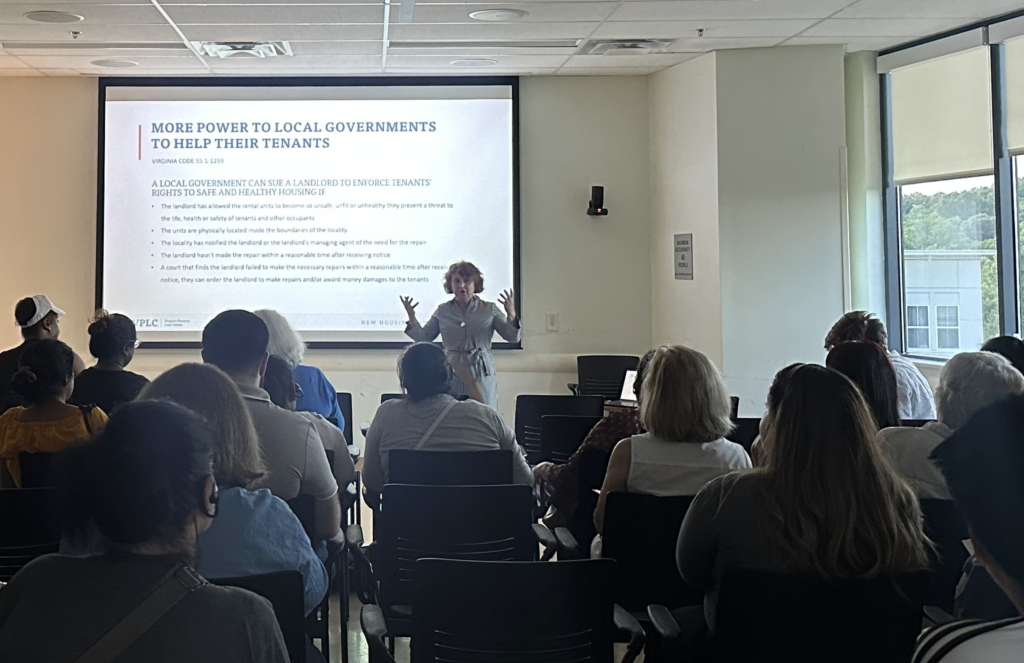
An additional new law grants local governments greater authority to assist tenants.
A local government can now sue a landlord to enforce tenants’ rights to safe and healthy housing if the landlord has allowed another unit to become so unsafe or unhealthy that it affects other tenants or if a court finds that the landlord failed to make necessary repairs.
Julia Key, Annandale Today’s summer intern, is a resident of Burke and a journalism student at Penn State University.
These policies are largely short-sighted attempts to help dishonest and disreputable tenants to avoid paying their legal obligations. These changes will reduce the supply of rental housing and ultimately hurt honest tenants by forcing rental increases to offset the costs of these misguided policies.
Oh yes. Wont anyone think about the poor beleaguered landlords. Give me a break.
I’ve tried to get my landlord to fix my trailer up for awhile but nothing been done yet